
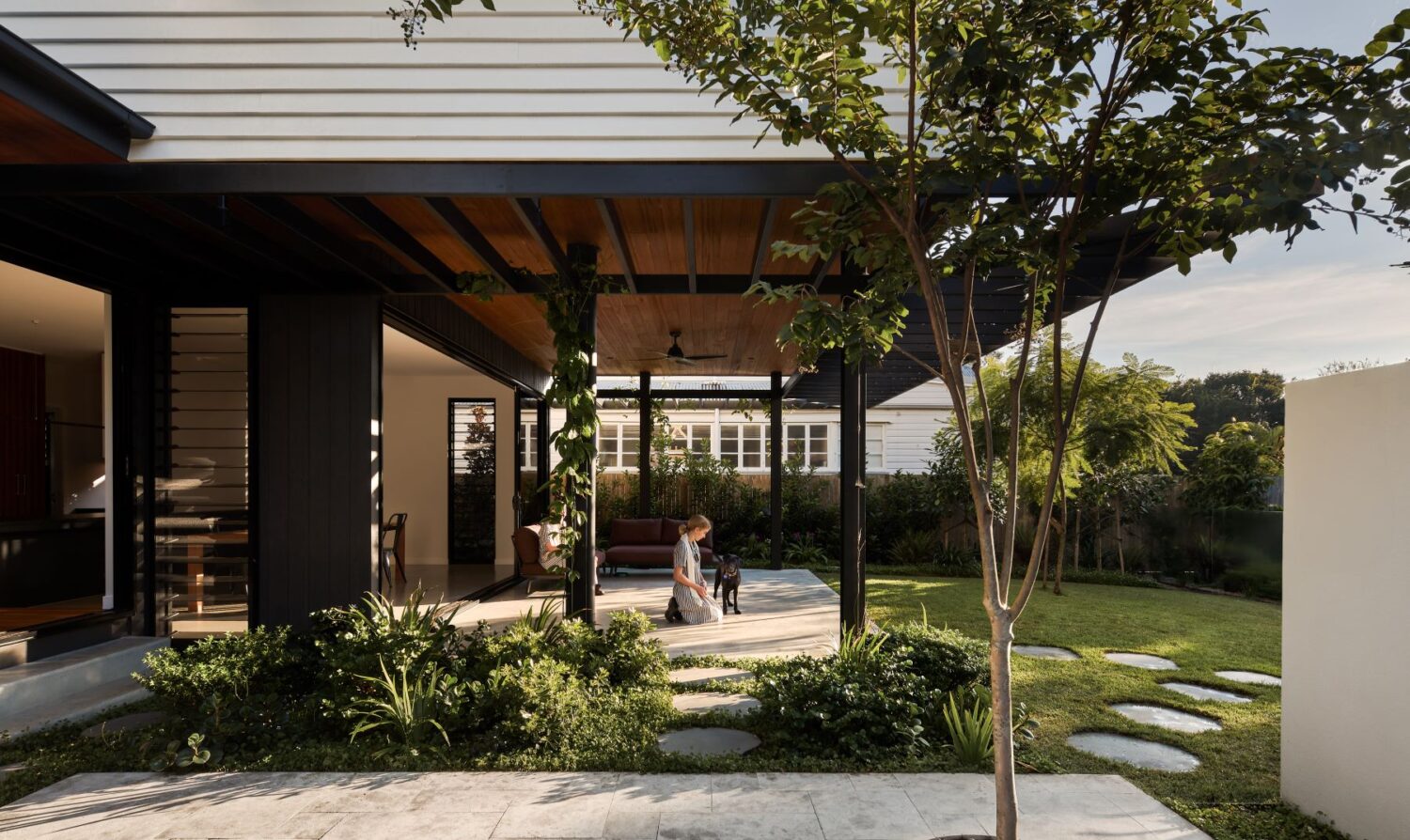
The most successful homes are not designed as buildings surrounded by gardens. They are conceived as complete environments where architecture, interiors and landscape are considered together from the very beginning.
When landscape and architecture are designed in harmony, the result is a home that feels larger, more connected to nature and more enjoyable to inhabit. Spaces flow naturally between indoors and outdoors, natural light and ventilation are enhanced, and the experience of living becomes richer and more immersive.
Imagine opening a wall of sliding glass doors and stepping onto a terrace that feels like a continuation of your living room. The floor material extends seamlessly beyond the threshold. A mature tree provides filtered shade across the outdoor dining area. Native planting softens the edges of built form while attracting birds and wildlife. The sound of water creates a sense of calm, and the garden becomes an extension of daily life rather than something viewed through a window.
In these moments, architecture and landscape are no longer separate disciplines. They become one cohesive experience.
Designing the House and Garden as One
Too often, landscaping is considered after a home has been designed or constructed. While a garden can certainly be added later, the most successful projects emerge when architecture and landscape are developed simultaneously.
A coordinated design process allows every element to support the others. Windows can be positioned to frame significant trees. Outdoor entertaining areas can become natural extensions of interior living spaces. Planting can provide privacy, shade and microclimatic benefits. Landscape features can influence circulation, views and the overall experience of moving through the home.
When both disciplines are considered together, the result feels intentional. The house belongs to the landscape, and the landscape belongs to the house.
Great Gardens Take Time
Unlike buildings, landscapes continue to evolve long after construction is complete. Trees mature, planting establishes itself and outdoor spaces become richer with time.
Developing a landscape strategy early allows homeowners to begin this process sooner. In many cases, portions of the landscape can be established before construction is completed, ensuring gardens are already growing while the home is being built.
Having a landscape masterplan and budget prepared alongside architectural documentation also streamlines implementation, allowing the garden to develop as quickly as possible once construction concludes.
The result is a home that feels complete from the outset rather than waiting years for the landscape to catch up.
Better Landscape Design Can Reduce Building Costs
One of the most overlooked benefits of integrated landscape and architectural design is the potential to reduce the amount of built space required.
When outdoor areas are thoughtfully designed and directly connected to interior living spaces, they effectively become additional rooms within the home. Covered terraces, courtyards, outdoor dining areas and garden rooms can accommodate activities that might otherwise require larger internal spaces.
This approach can lead to more efficient floor plans without compromising functionality or amenity. Rather than simply increasing the size of a building, integrated design focuses on improving how spaces are used and experienced.
Often, the result is a home that feels larger and more generous while requiring less built area.
Creating More Sustainable Homes
Landscape plays a critical role in the environmental performance of a home.
When considered alongside architecture, gardens become active contributors to comfort, energy efficiency and resilience. Trees can provide seasonal shading. Planting can cool surrounding air temperatures and reduce heat gain. Carefully positioned openings can harness prevailing breezes and improve natural ventilation.
Integrated design also creates opportunities for more sustainable systems, including:
- Rainwater harvesting and reuse
- Edible gardens and productive landscapes
- Permeable paving and stormwater management
- Habitat creation for birds and pollinators
- Microclimates that improve thermal comfort
These strategies help create homes that are more comfortable, environmentally responsive and resilient over time.
The Connection Between Nature and Wellbeing
A growing body of research demonstrates the positive effects of nature on human health and wellbeing. Exposure to greenery, natural light, water and biodiversity has been linked to reduced stress, improved mood, enhanced cognitive performance and greater overall life satisfaction.
This concept, often referred to as biophilic design, recognises our innate connection to the natural world and the importance of maintaining that connection within the built environment.
By integrating landscape into the architectural experience, homes become more than functional shelters. They become places that actively support physical health, emotional wellbeing and everyday enjoyment.
Whether it is a kitchen overlooking a productive garden, a courtyard that captures morning light or a shaded outdoor room used throughout the year, these connections to nature enrich daily life in meaningful ways.
A Holistic Approach to Residential Design
The most memorable homes are those where architecture, interiors and landscape are inseparable. They work together to create places that feel effortless, cohesive and deeply connected to their environment.
Designing landscape and architecture simultaneously leads to better spatial outcomes, stronger connections to nature, improved sustainability and a more enriching living experience. It allows every part of a project to contribute to a single vision rather than functioning as a collection of independent elements.
A home should not end at the external wall. The landscape is an extension of architecture, and when both are designed together, the result is greater than the sum of its parts.