











Designing Inward: A Tropical Courtyard House for Lae, Papua New Guinea
Designing in Lae, Papua New Guinea presents a unique set of opportunities and constraints. With security considerations, a dense urban setting and limited long-range outlooks, the design approach for this residence was not to rely on distant views, but instead to create an inward-looking home shaped by landscape, privacy and climate.
Rather than orienting the house towards its surroundings, the architecture is grounded within its own tropical garden. Existing mature trees play a defining role in the composition, providing natural screening from neighbouring properties while establishing a framework around which the home is arranged.
In this context, landscape is not simply a backdrop—it becomes the primary organiser of space.
A Climate-Led Design Approach
Responding to Lae’s tropical climate, both the material palette and building form are guided by passive environmental principles. The design seeks to encourage natural ventilation, moderate solar heat gain and minimise reliance on mechanical cooling.
The floor plan is organised around a deliberate gradient of privacy, reflecting one of the client’s key priorities. Social spaces are positioned to encourage gathering, entertaining and connection, while the more private areas of the home are progressively withdrawn, creating cooler, quieter environments for rest and retreat.
This sequence establishes a calm spatial rhythm, allowing the experience of the home to transition naturally from open, communal spaces to more intimate and contemplative settings.
Design Concept 1: The Elevated Courtyard House
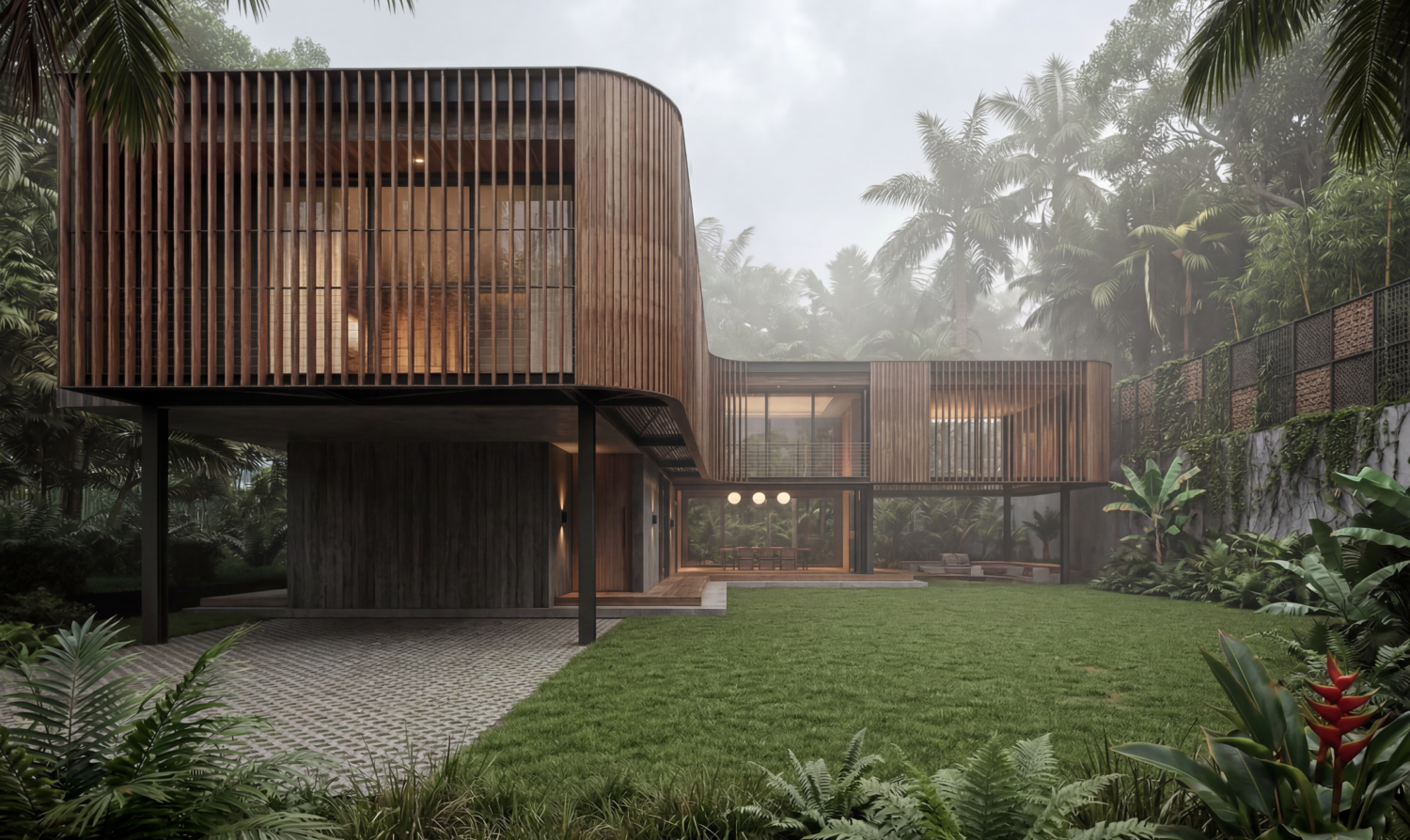
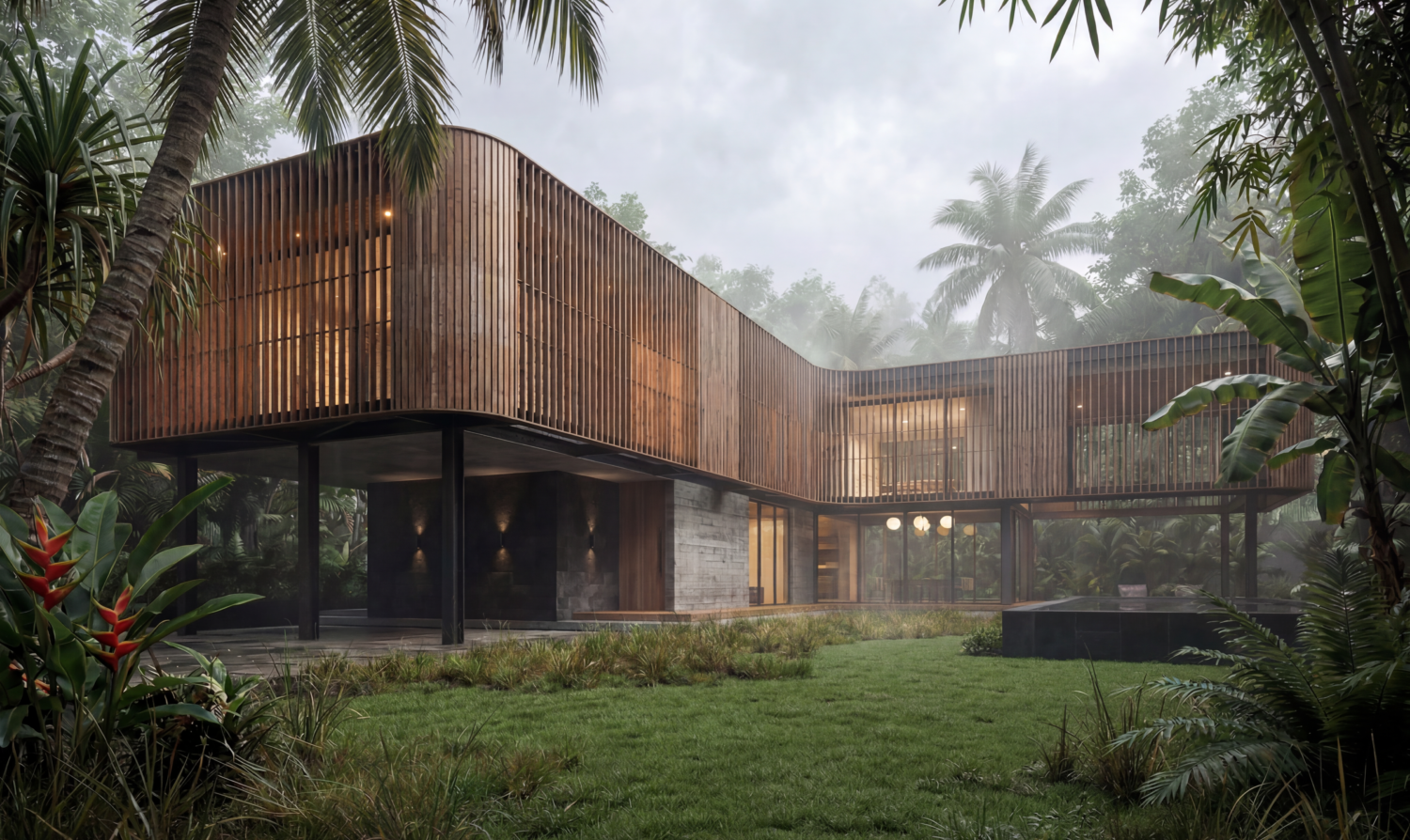
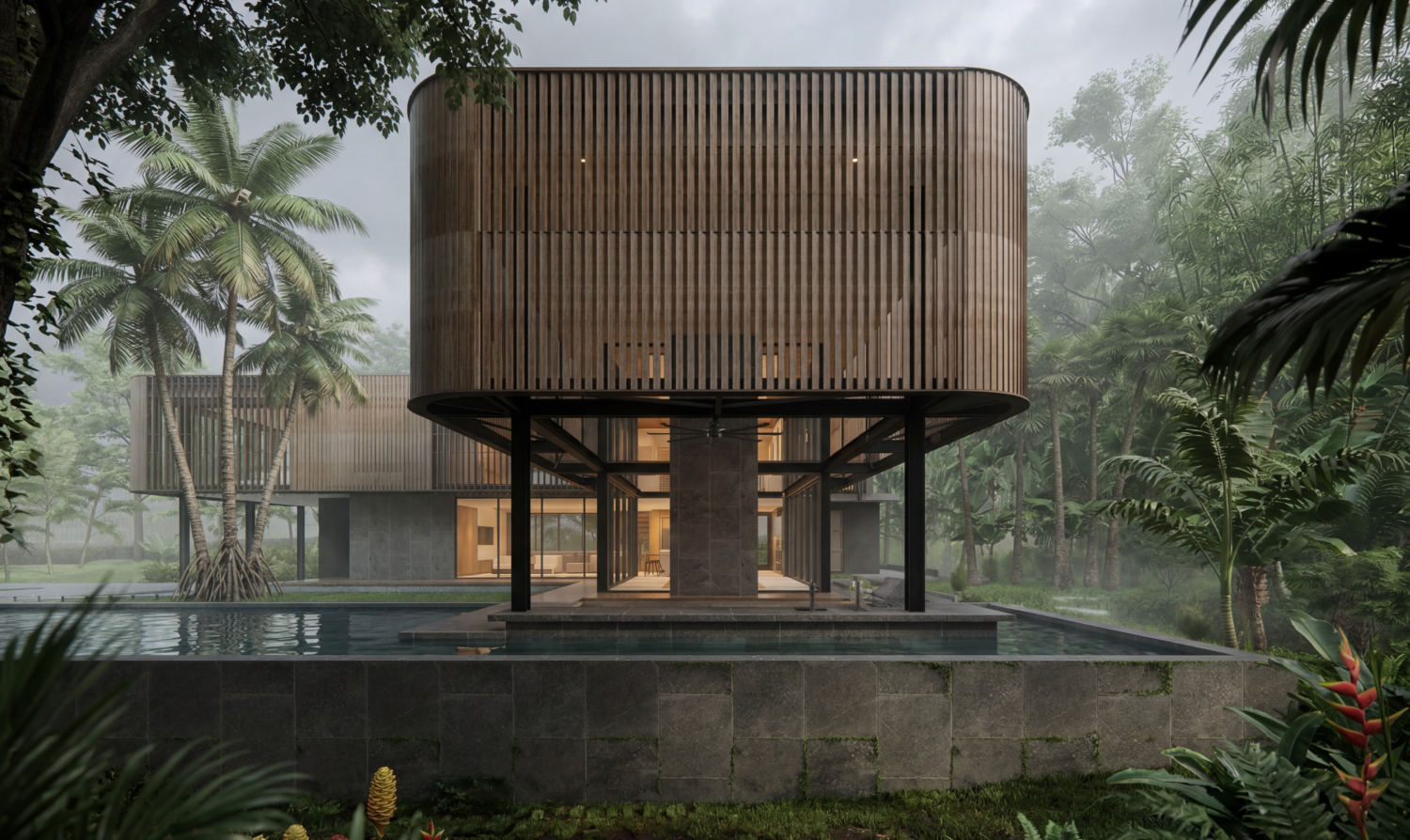
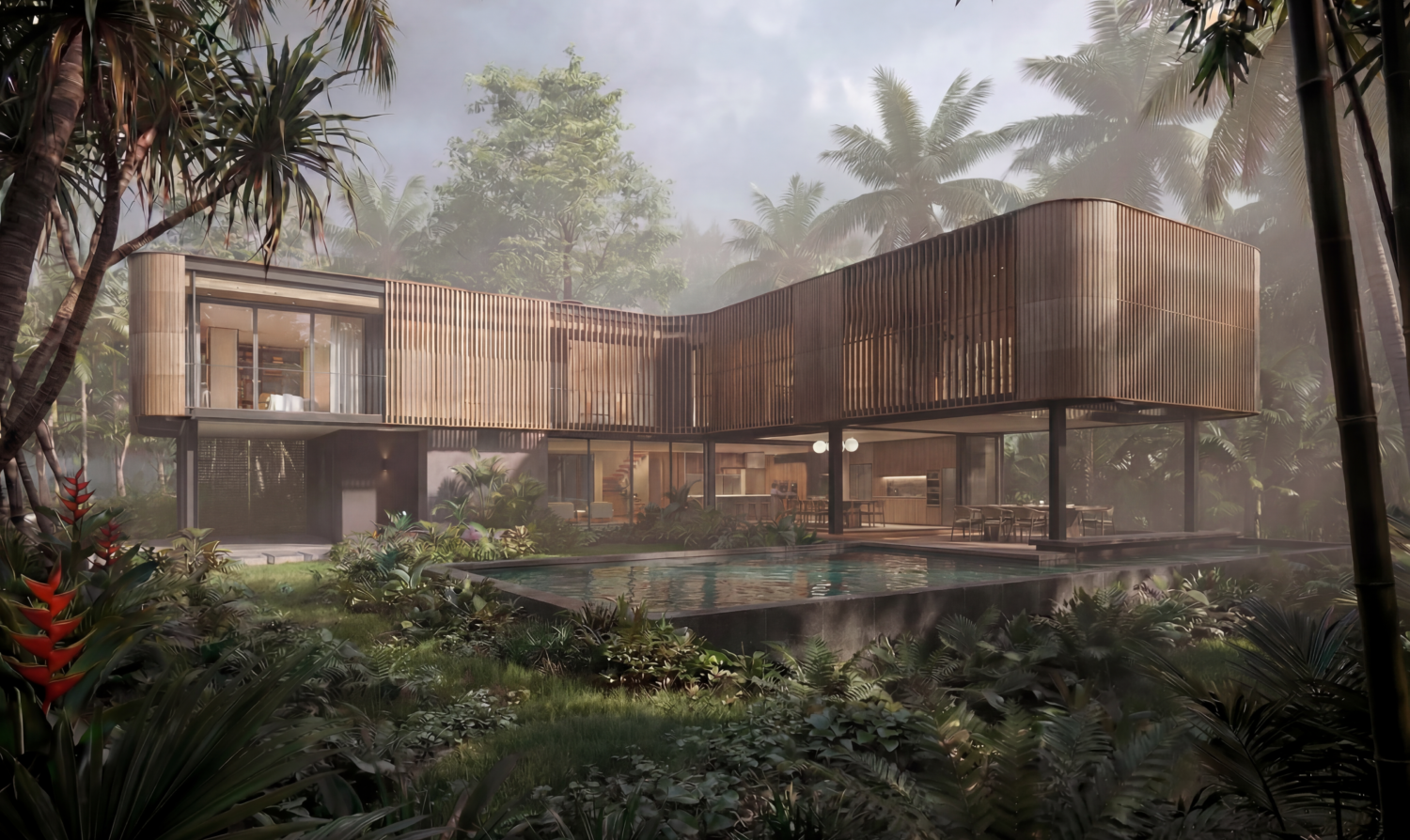
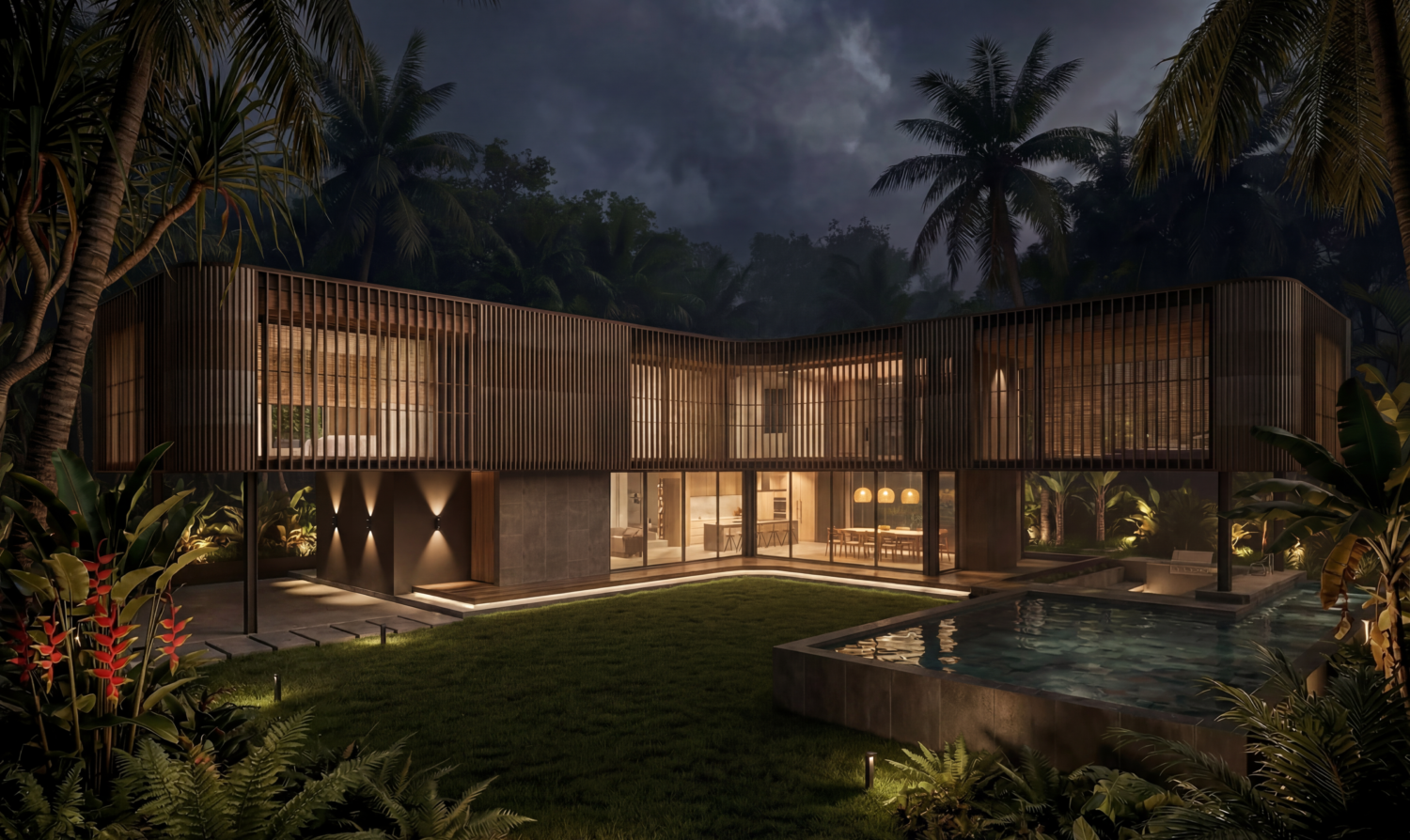
The first concept explores a confident architectural response to the site through an elevated two-storey composition that clearly separates public and private functions.
Positioned prominently within the site, the L-shaped form establishes a strong sense of arrival while framing the surrounding tropical landscape. The arrangement also defines a series of protected outdoor spaces that become extensions of the home itself.
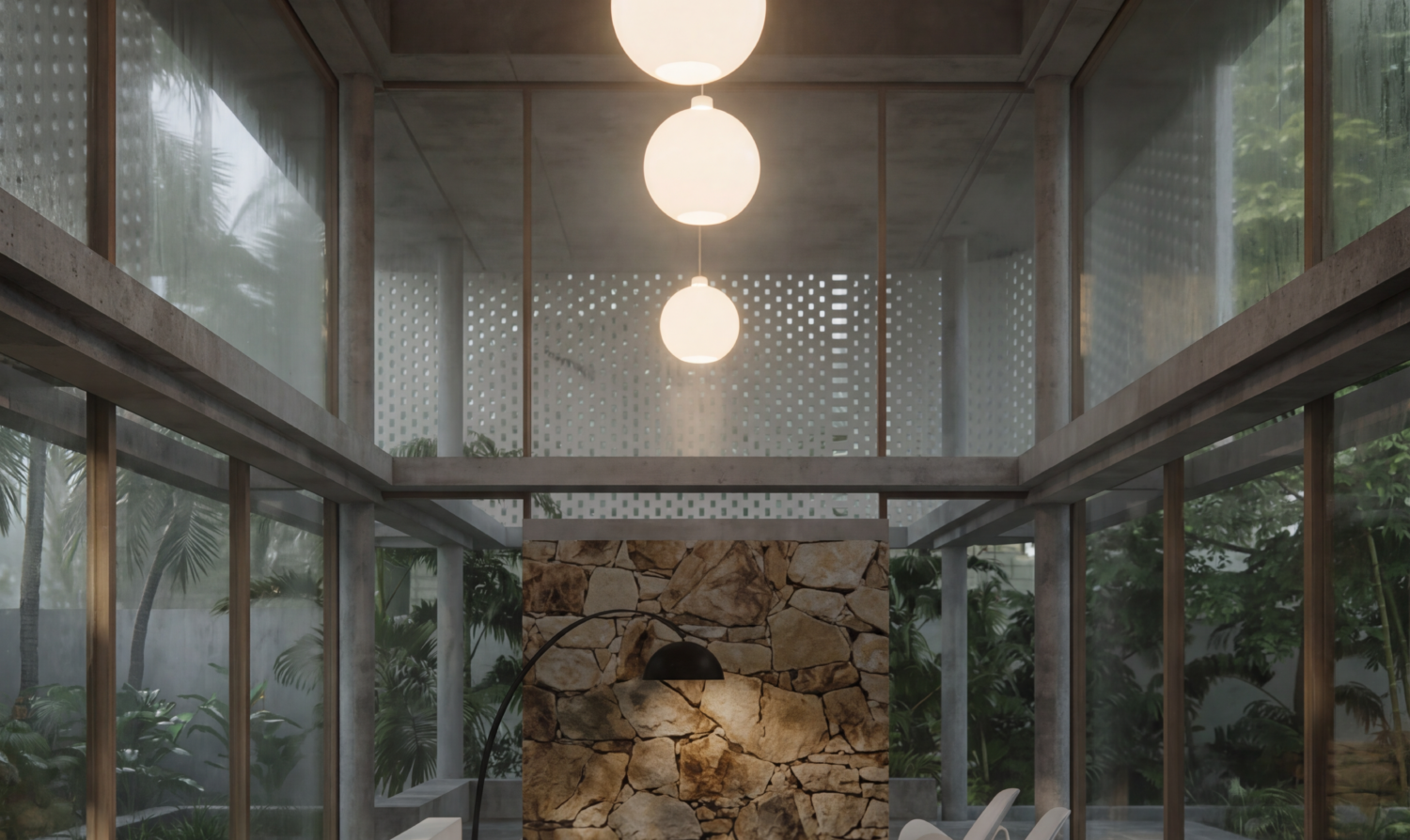
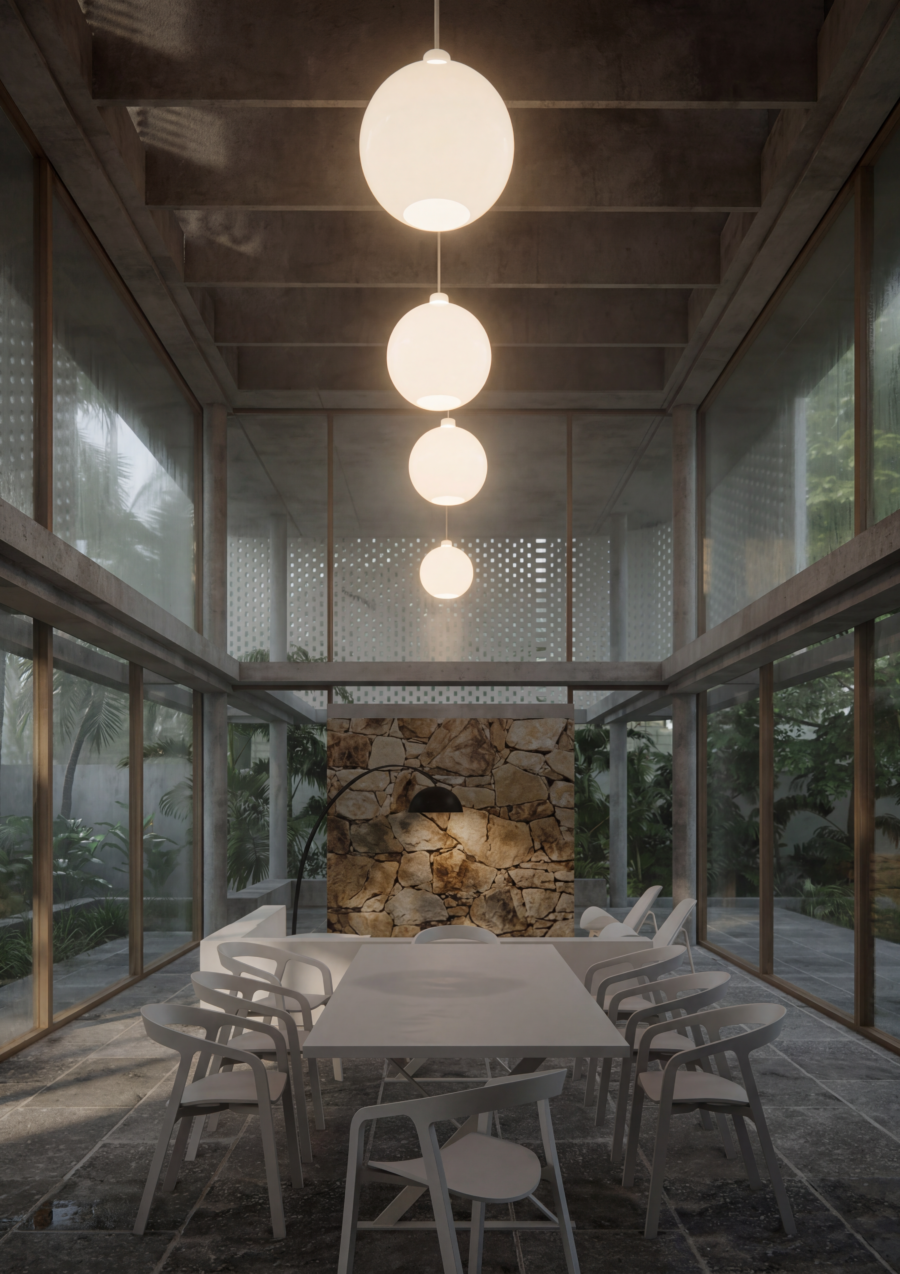
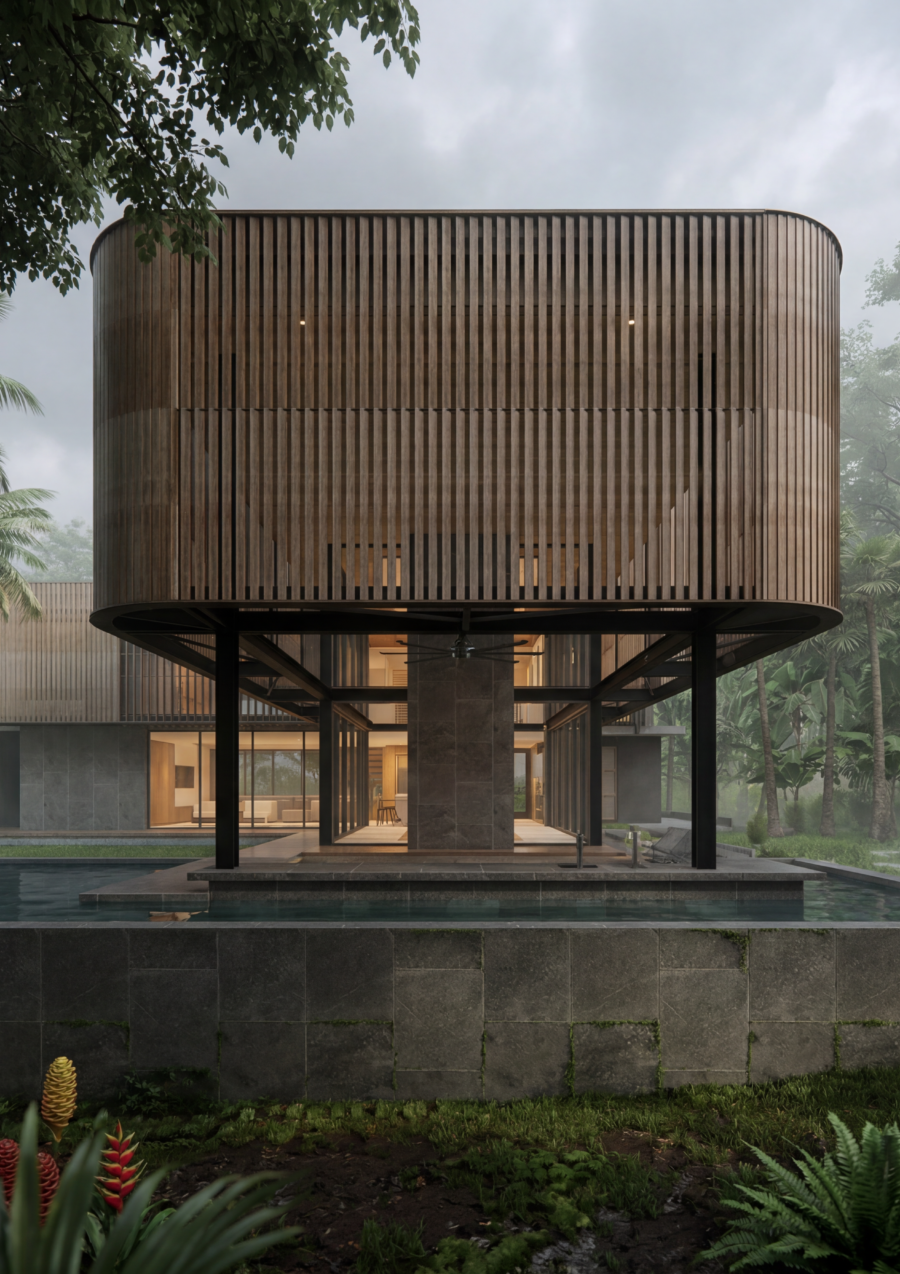
The upper level accommodates the private family spaces, wrapped in a perforated masonry screen that responds simultaneously to privacy, security and climate. The filtered façade softens sunlight, promotes airflow and creates a layered architectural expression where solidity and openness exist in balance.
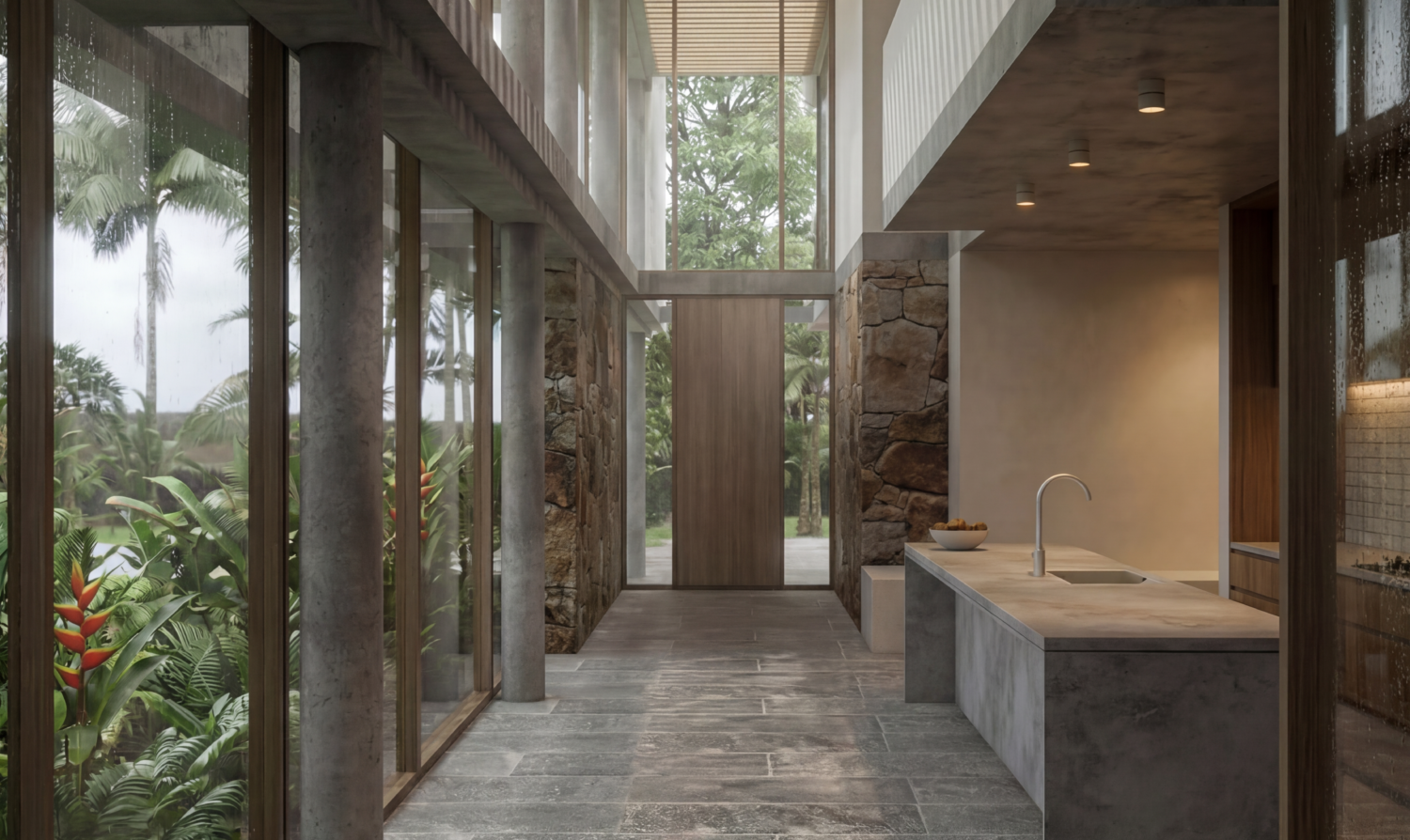
At ground level, generous living and entertaining spaces open directly onto the landscape, reinforcing the connection between inside and out.
The site is organised around two distinct outdoor environments. A generous front lawn and pool terrace provide space for entertaining and family gatherings, while a more intimate rear garden supports quieter moments through nature play, productive planting and shaded tropical landscaping.
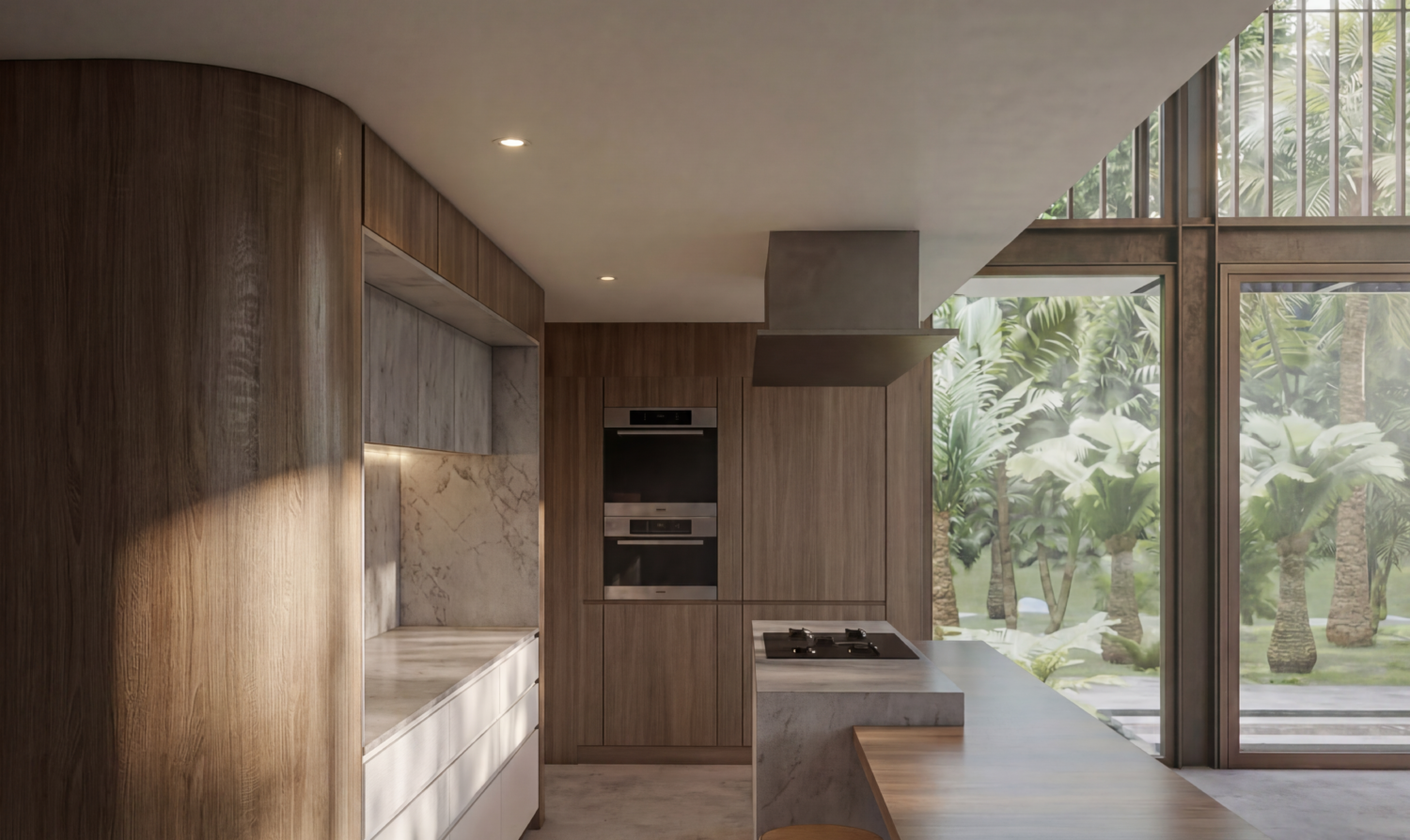
Internally, double-height volumes promote natural ventilation while drawing daylight deep into the plan. These spaces also frame carefully composed views into the surrounding gardens, strengthening the relationship between architecture and landscape.
The result is a home that balances security, openness and environmental performance through a carefully considered arrangement of space, creating an inward-focused tropical sanctuary where landscape becomes the defining architectural experience.


Design Concept 2: The Courtyard Pavilion
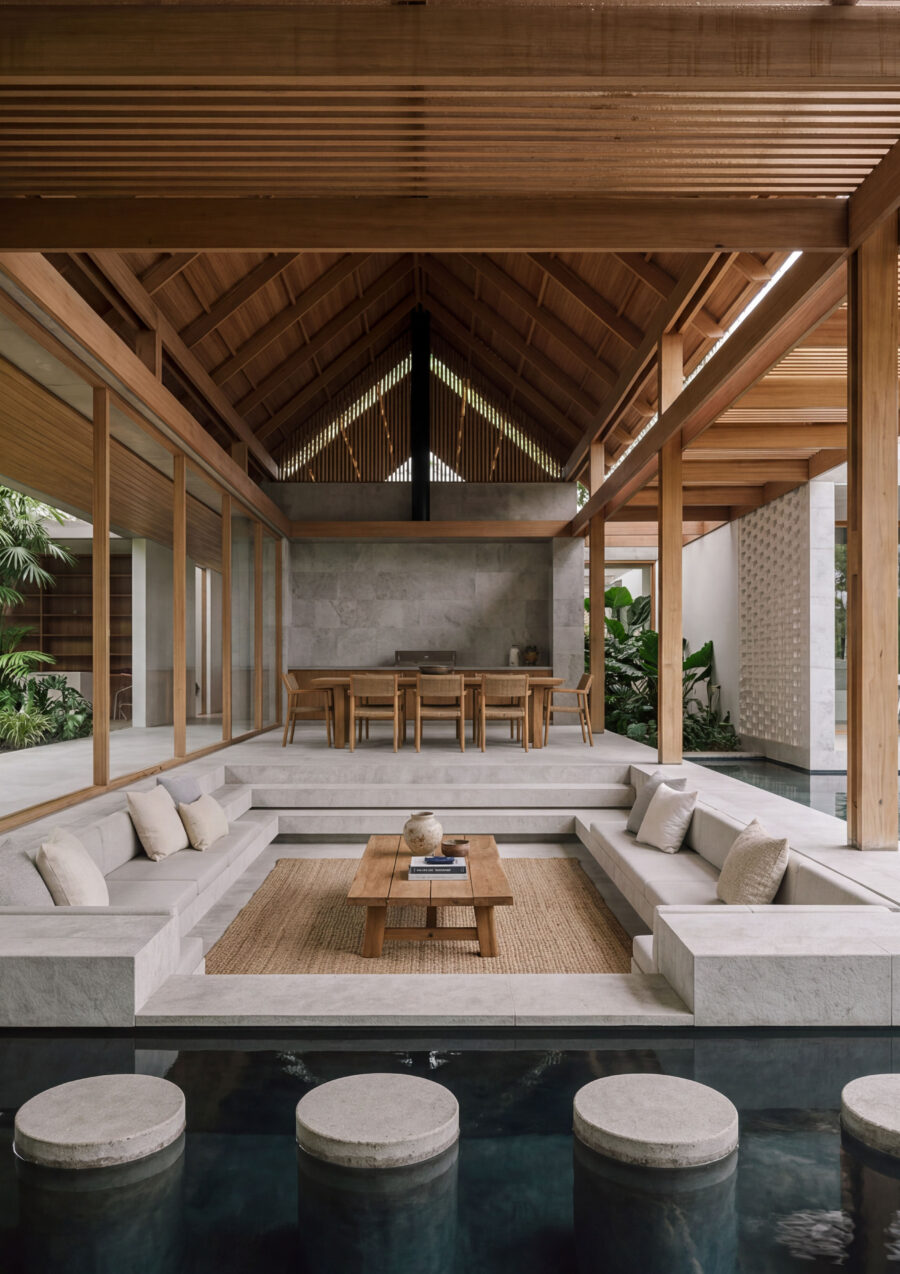
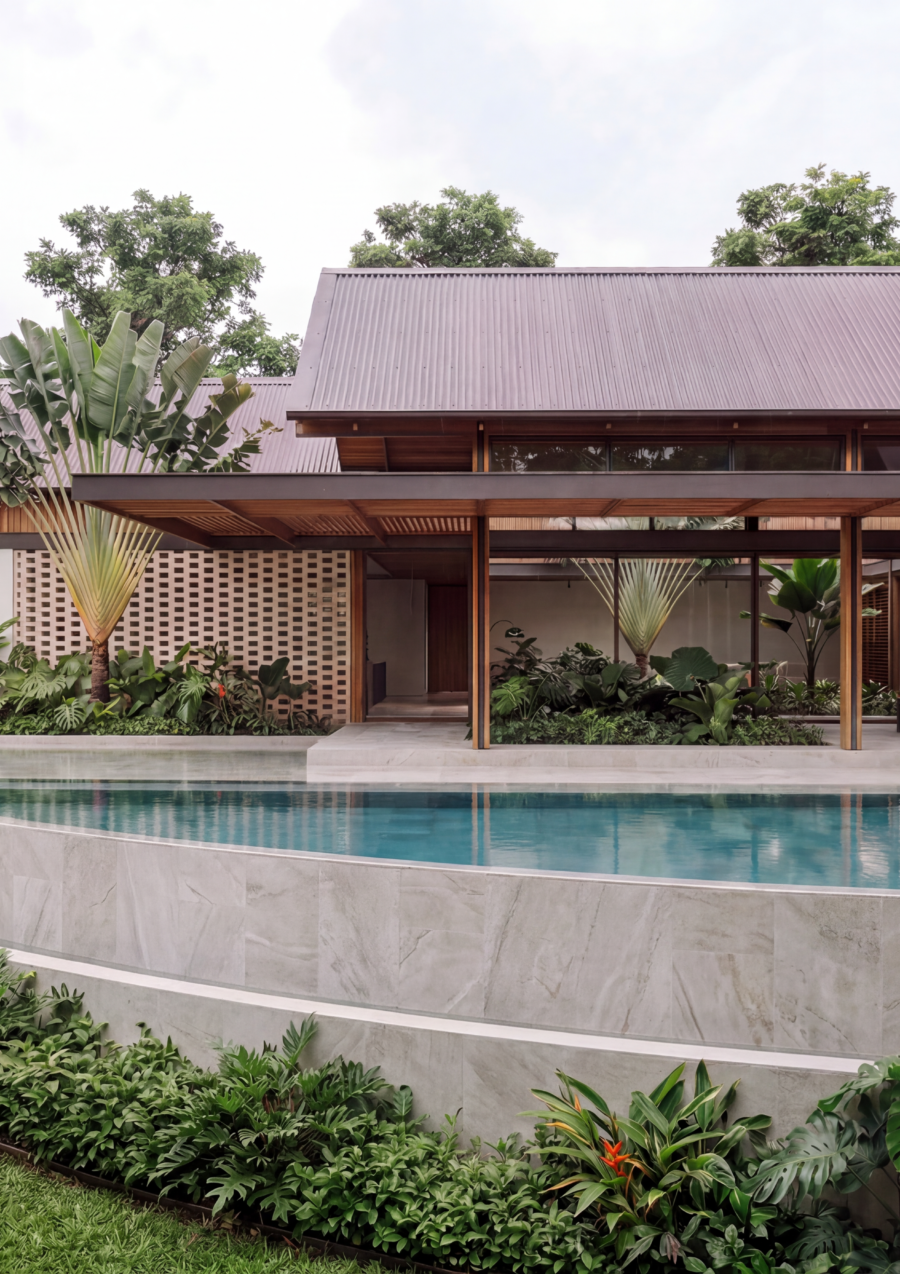
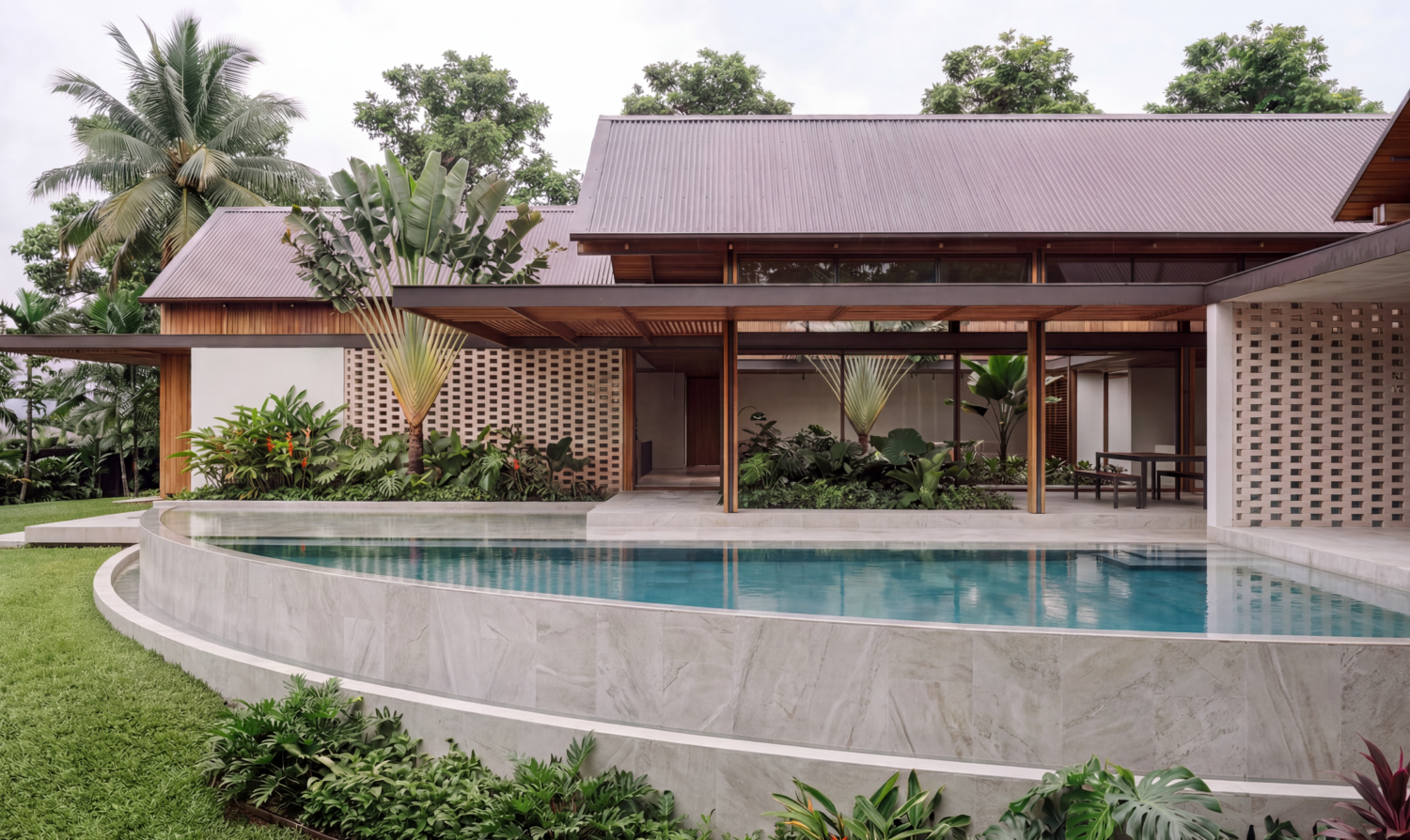
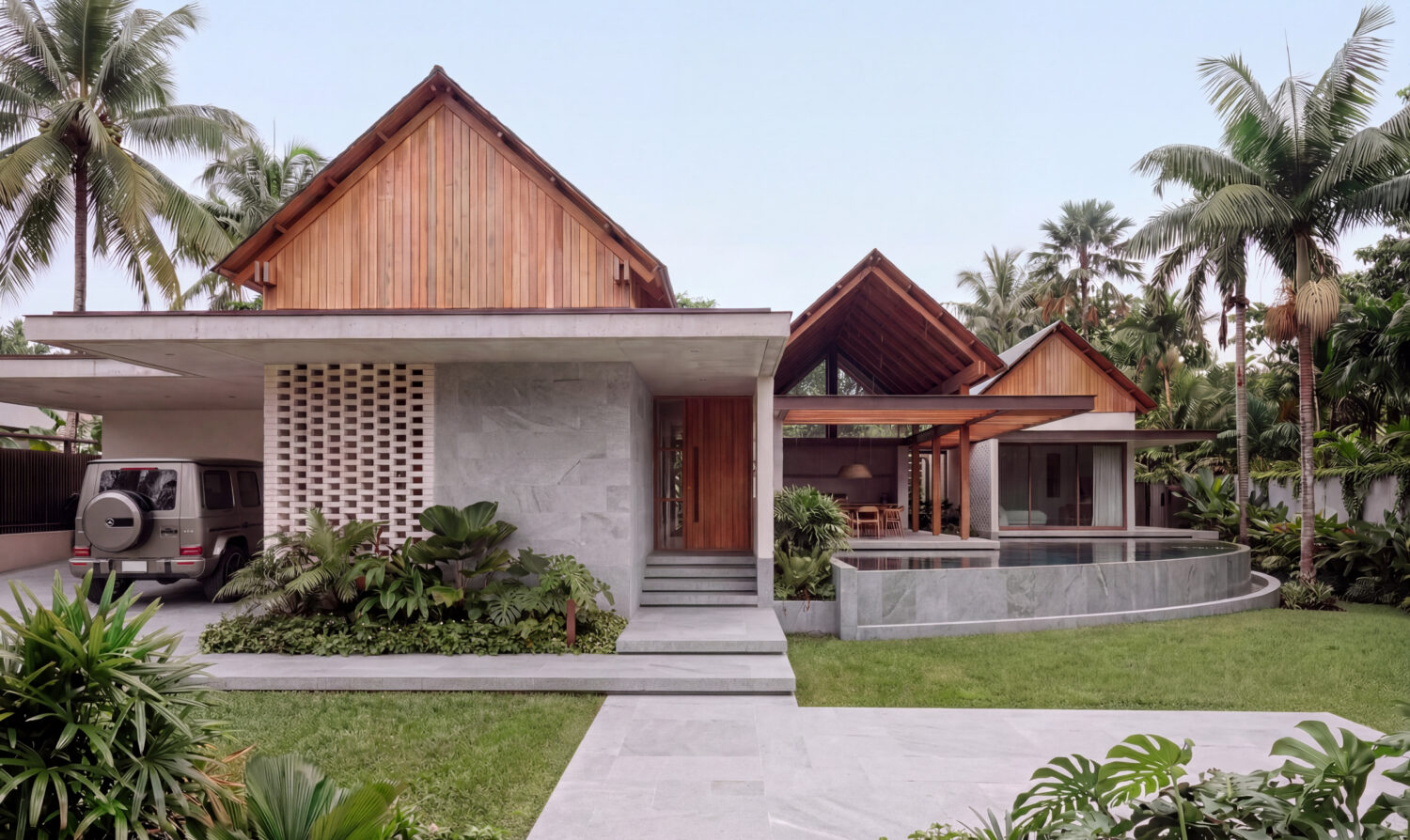
The second concept adopts a more dispersed architectural strategy, exploring how a single-storey home can achieve the same sense of privacy, security and spatial hierarchy through landscape rather than built form.
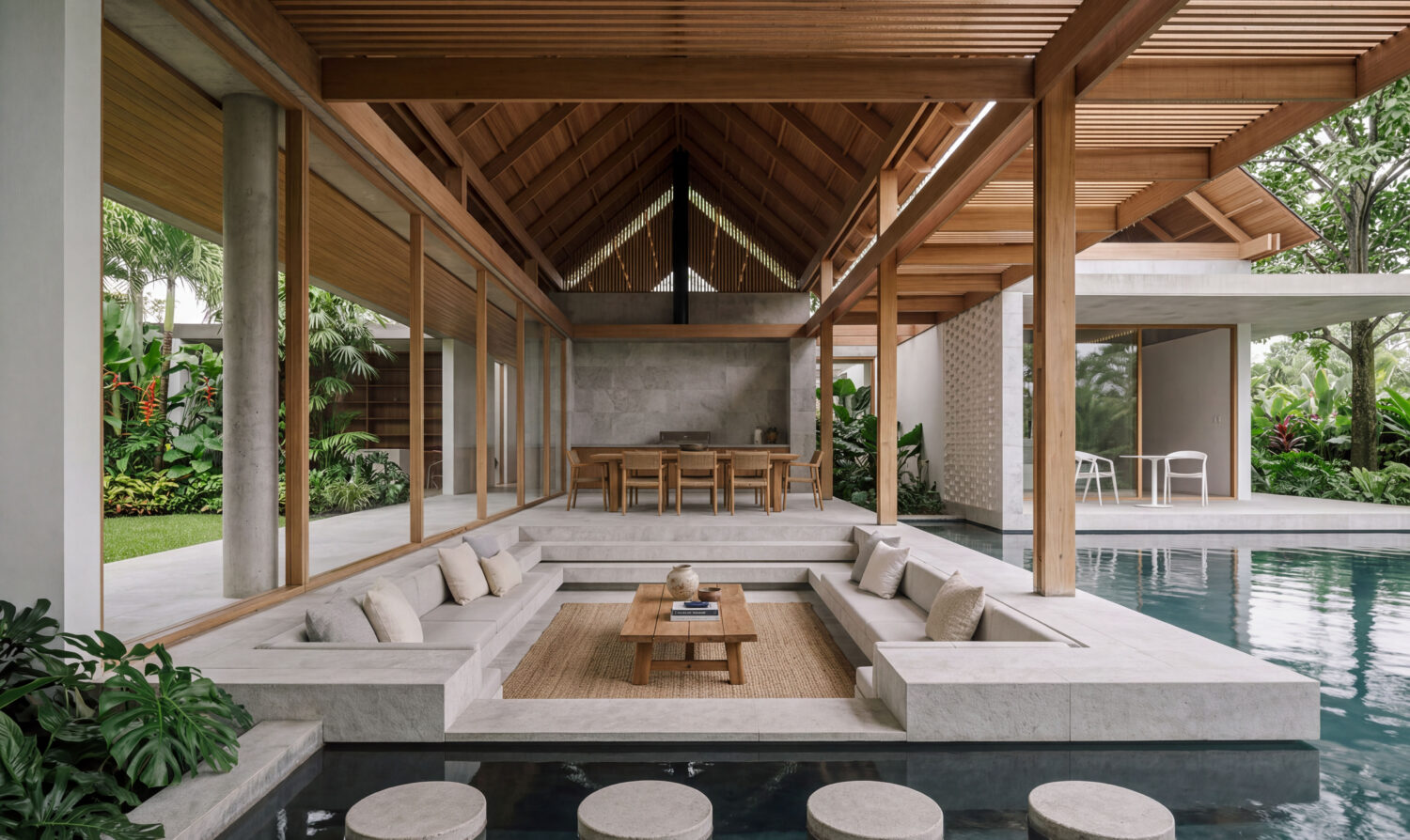
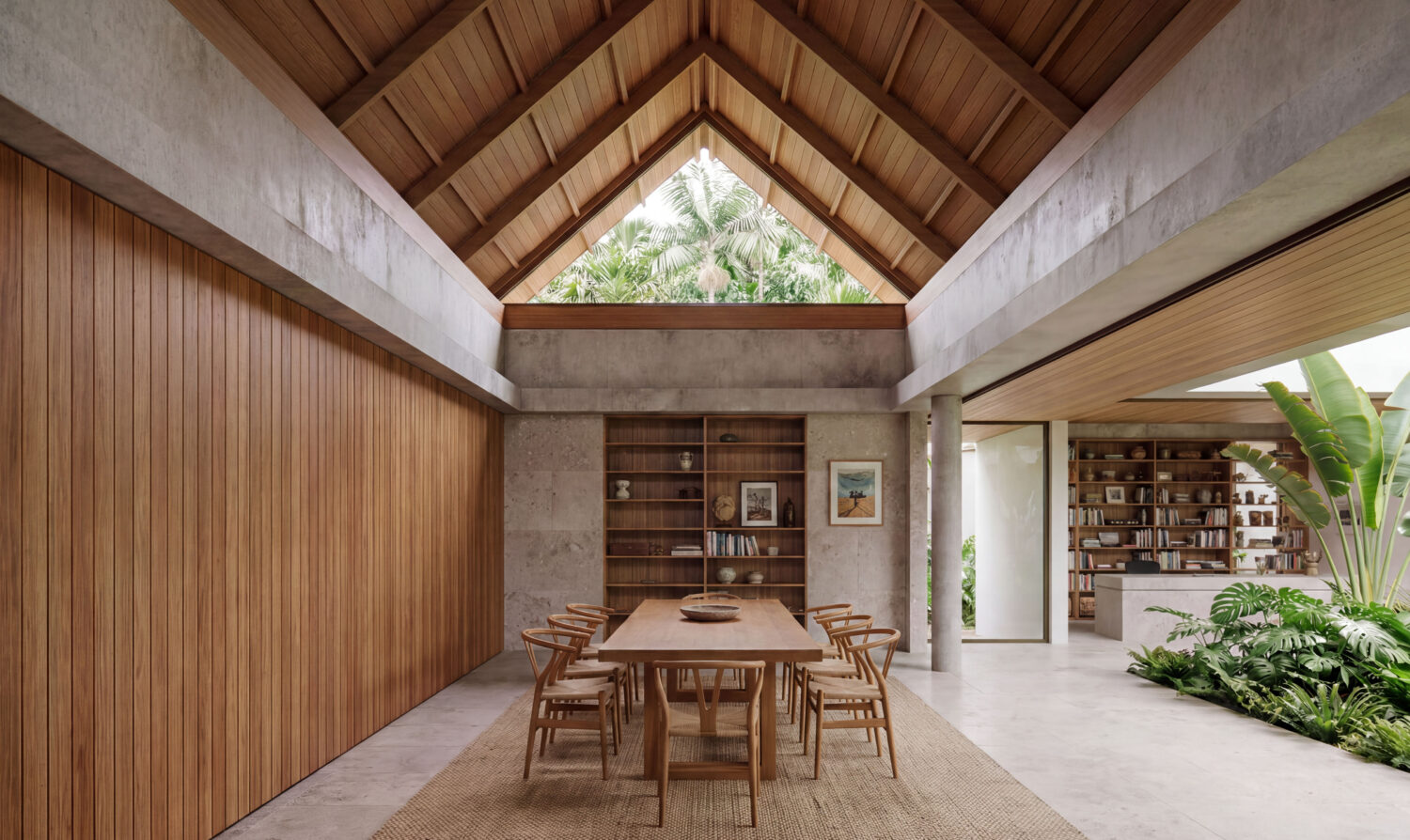
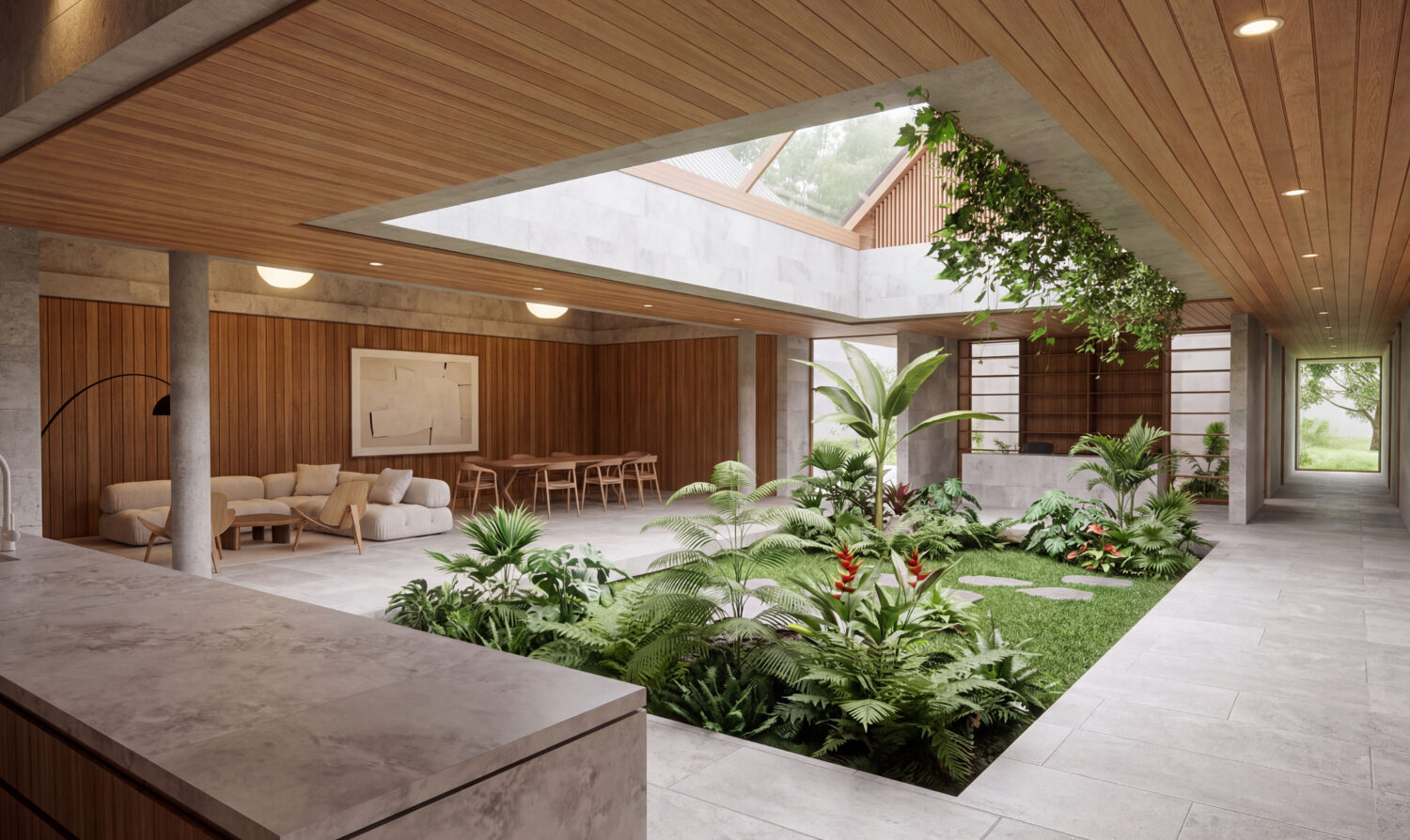
Instead of a single consolidated volume, the residence is conceived as a series of interconnected pavilions woven through the site. Each pavilion is carefully positioned in response to its surrounding garden, allowing the landscape to become an integral part of everyday living rather than simply framing it.
This approach deliberately challenges the notion that privacy is achieved through enclosure alone. Instead, it relies on carefully composed relationships between buildings, courtyards and planting to create a sequence of protected outdoor rooms that mediate between the public and private realms.
Arrival is defined by a sculptural curved pool, which acts as the organising element of the composition. From this point, the home unfolds gradually, with living, entertaining and private spaces arranged around a series of landscaped courtyards.
As movement progresses through the house, the spaces become increasingly private, establishing a clear hierarchy without relying on changes in level. Each courtyard is designed with its own scale, character and microclimate, responding to the adjacent rooms while encouraging natural light, ventilation and a continual connection with the surrounding landscape.
The result is a home where the boundaries between architecture and garden become intentionally blurred, creating an immersive tropical environment in which landscape is experienced as an extension of the living spaces themselves.
Two Concepts, One Brief
Although architecturally distinct, both concepts respond to the same fundamental brief: to create a secure, climate-responsive home that places landscape, privacy and everyday living at the centre of the design.
The first concept expresses these ideas through a bold, elevated composition, using vertical organisation to separate public and private life while framing generous communal spaces below.
The second takes the opposite approach, dissolving the architecture into a series of pavilions and courtyards, where movement through landscape becomes the defining experience of the home.
Neither solution is presented as a preferred outcome. Instead, they represent two complementary explorations of the same design question—testing how different architectural strategies can shape the experience of living within a tropical climate while responding to the unique opportunities of the site.