Lae

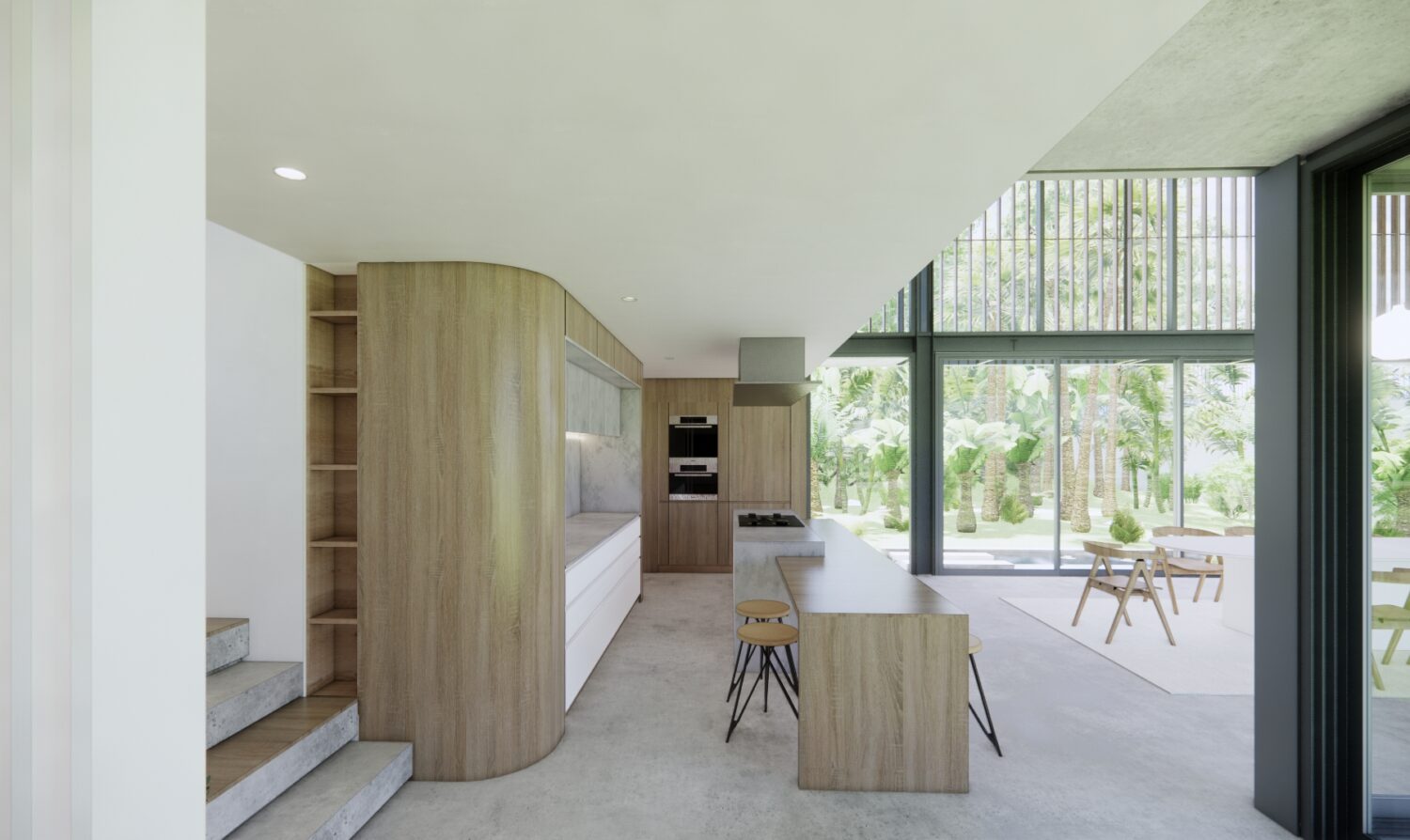
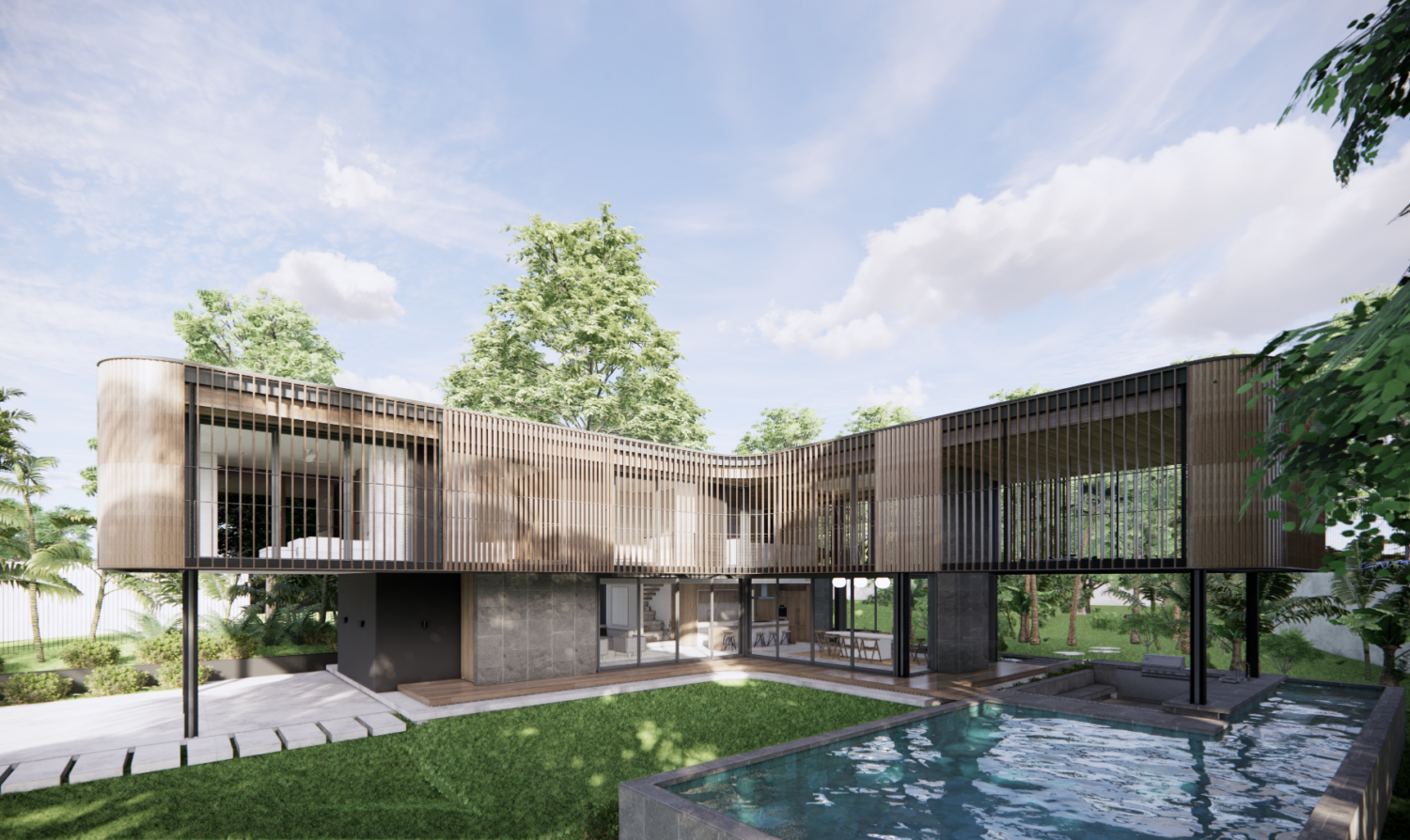
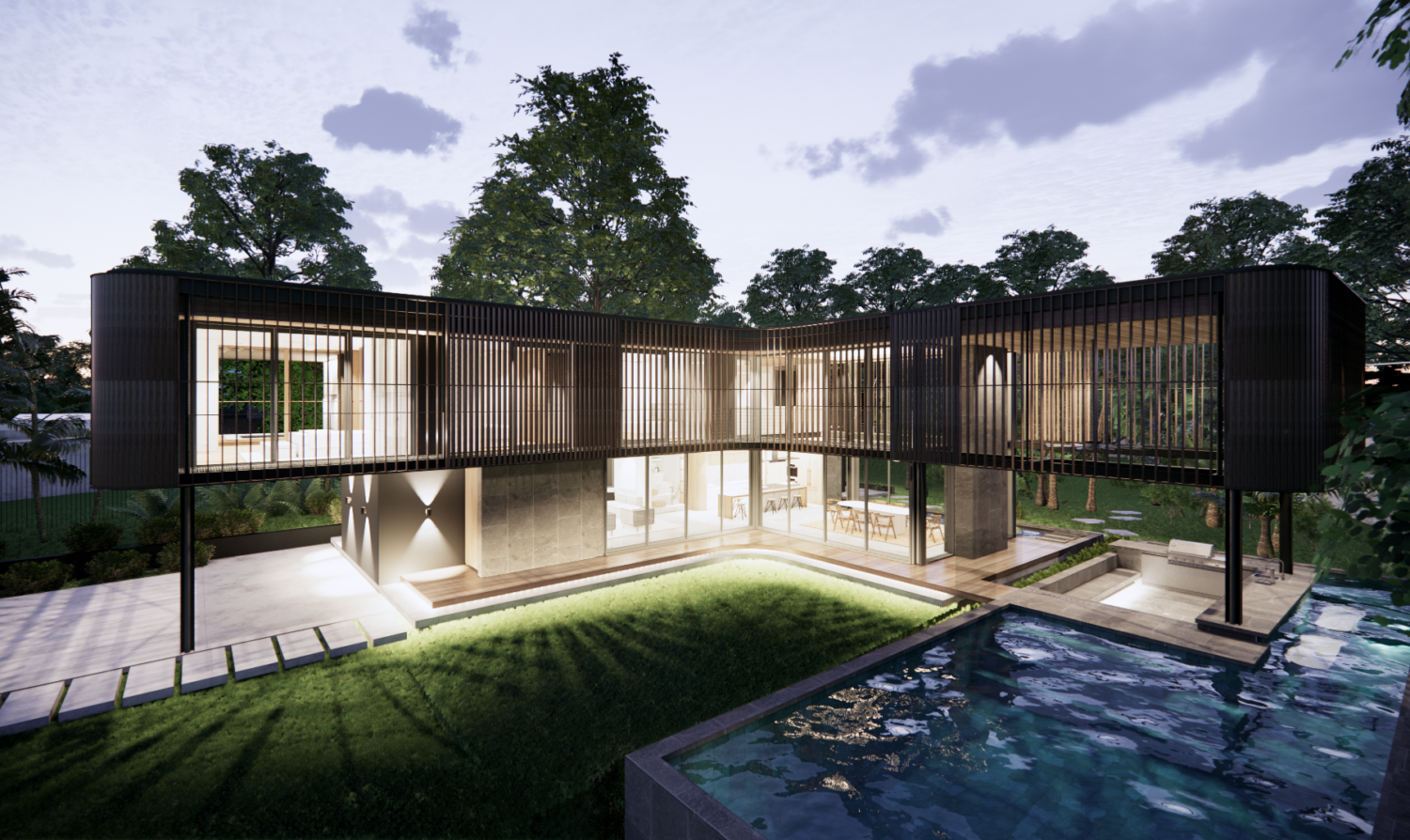
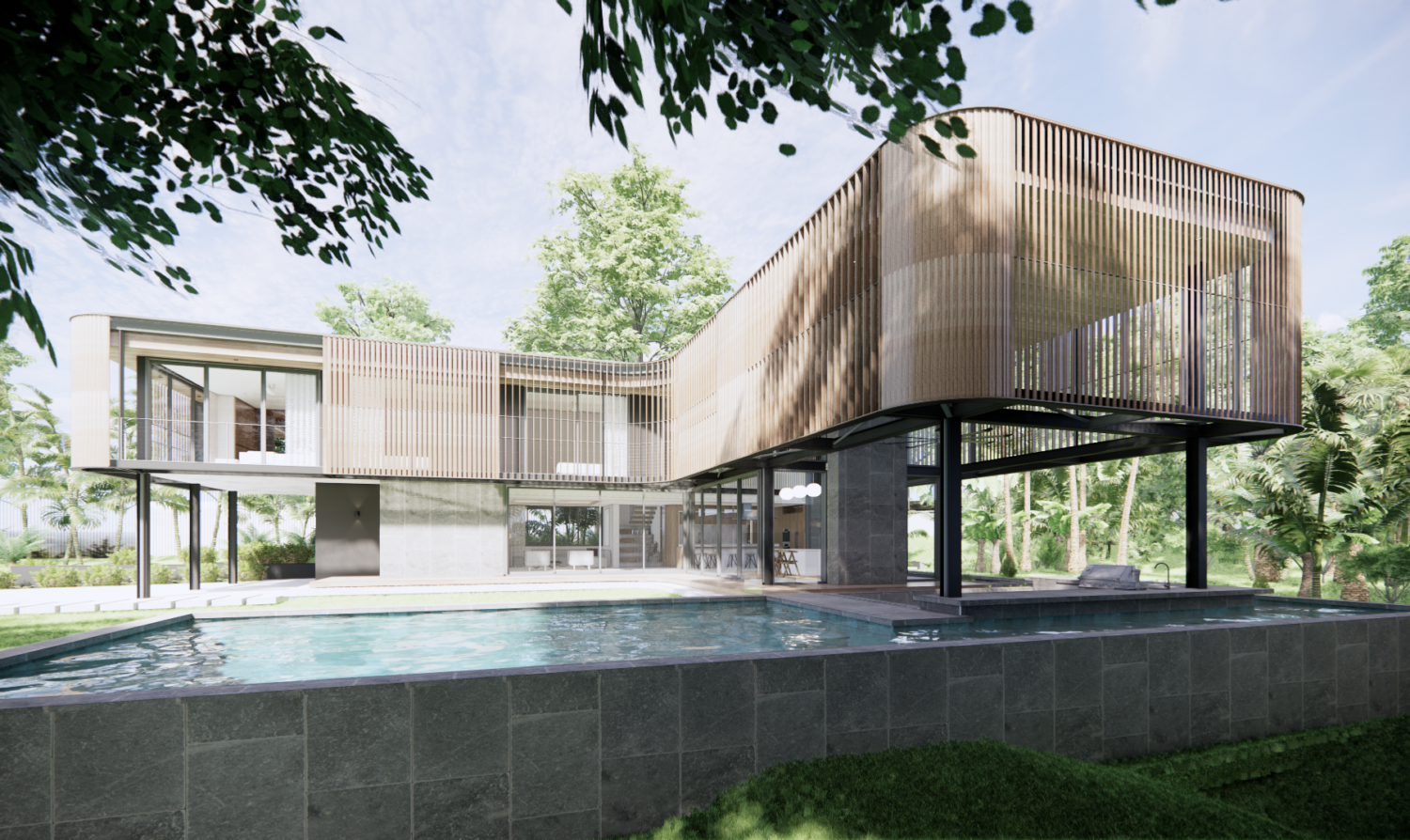
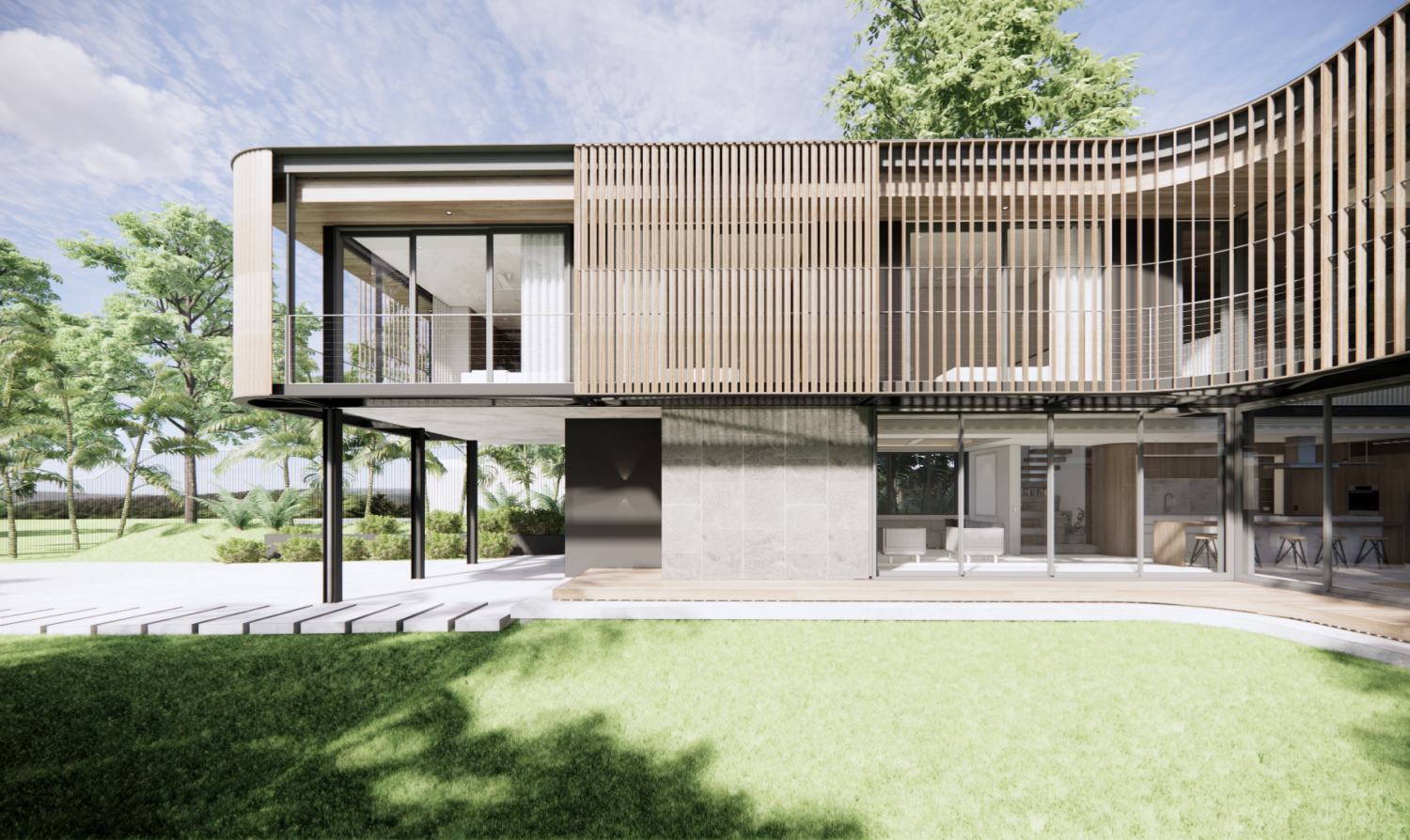
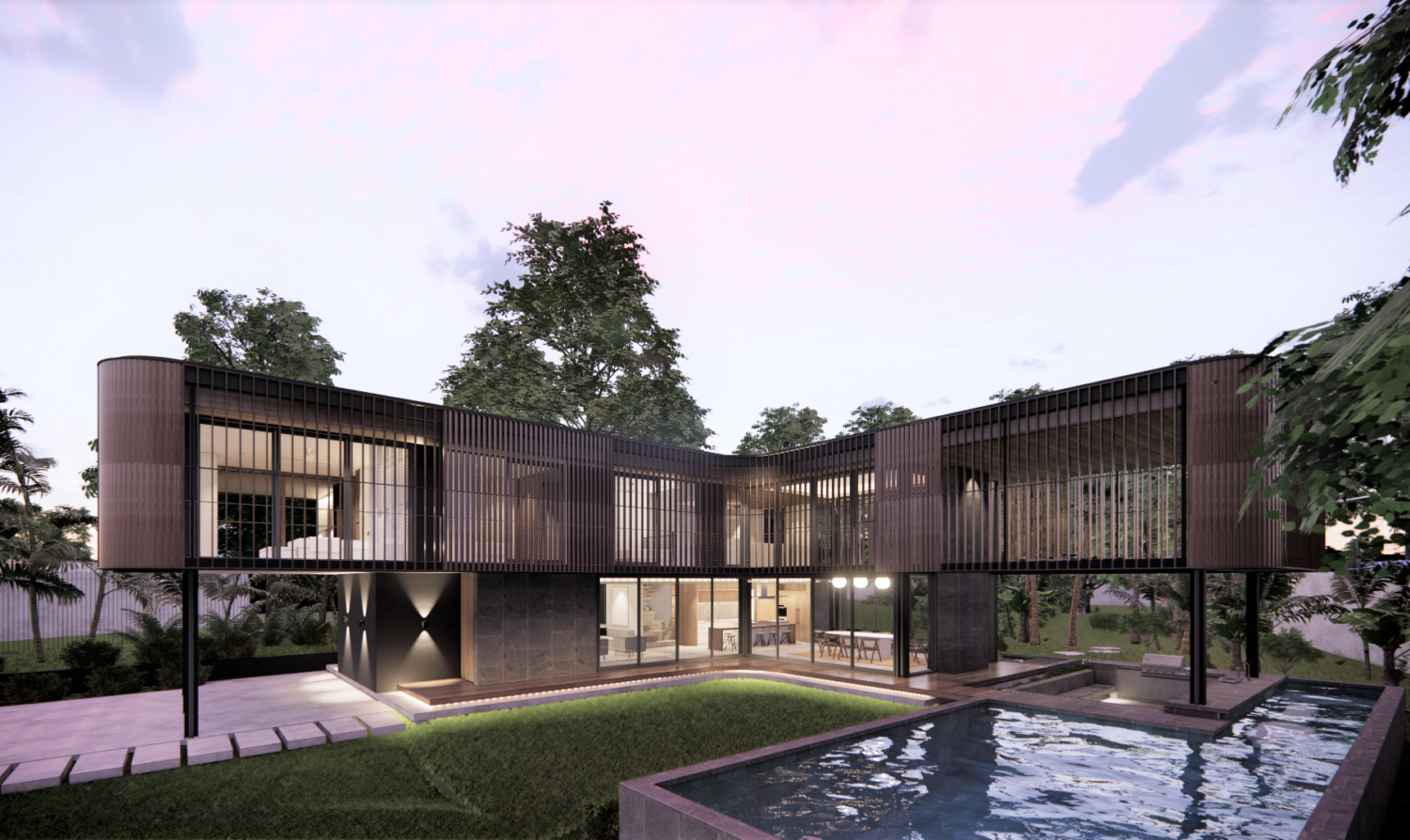
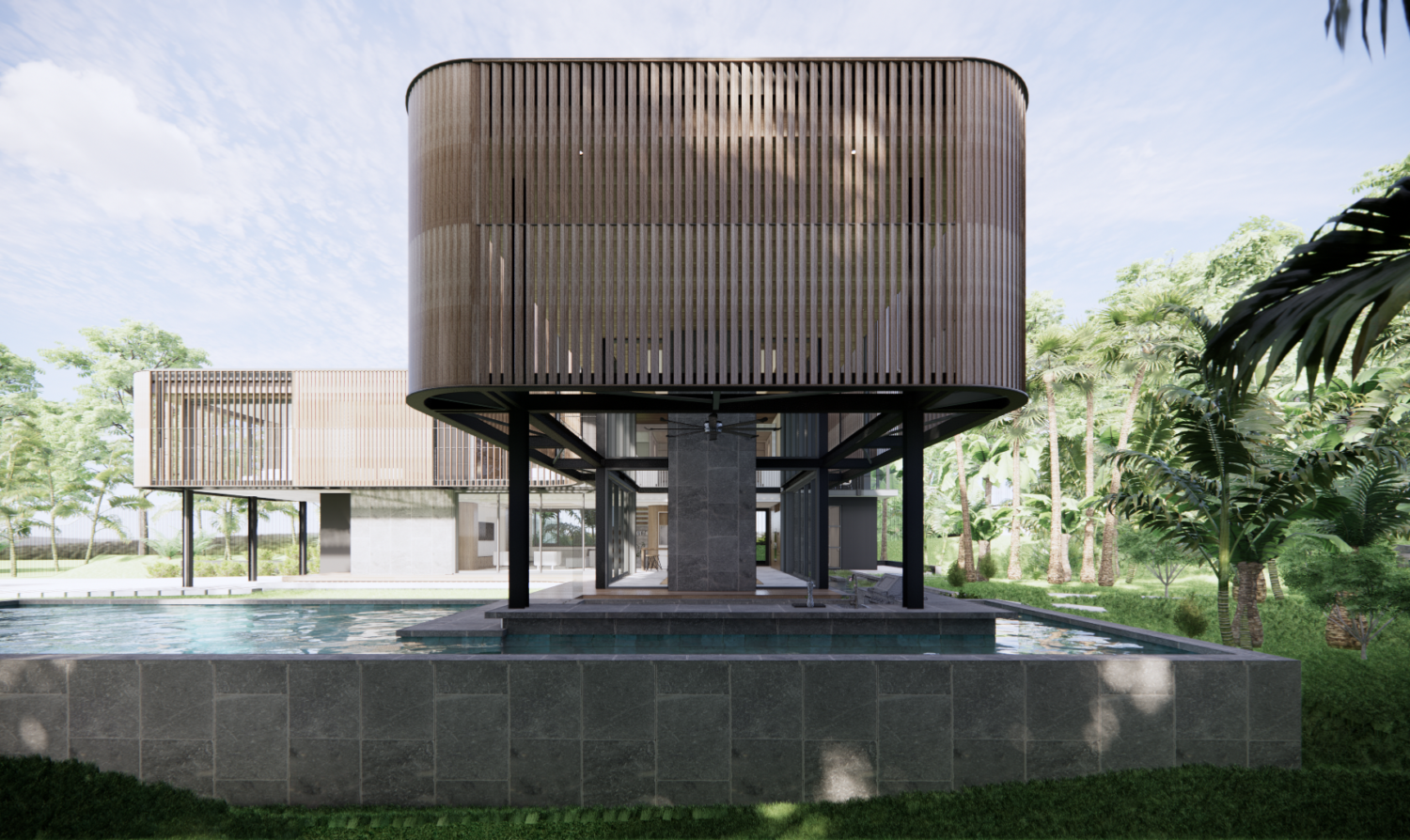
Sited on a sloping property in Lae, Papua New Guinea’s second-largest city, the project responds to a tropical climate and a complex set of site conditions including security requirements, seismic considerations, and locally available construction capabilities.
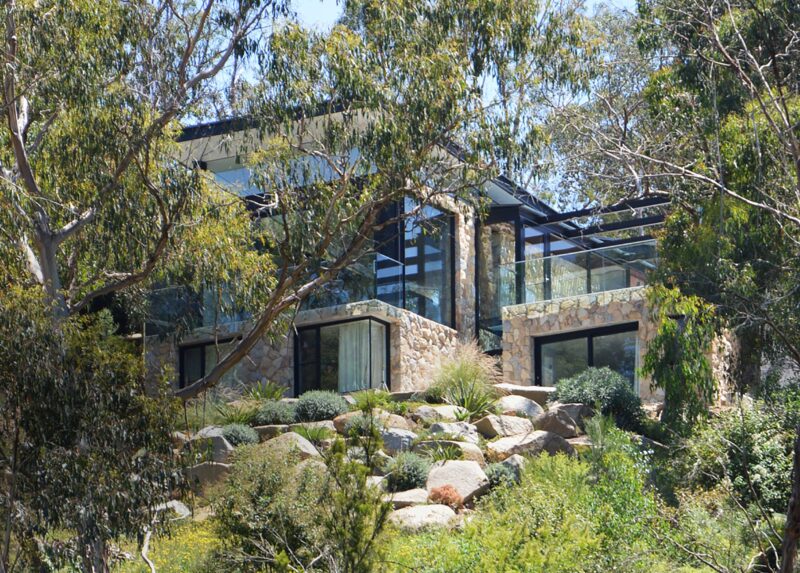
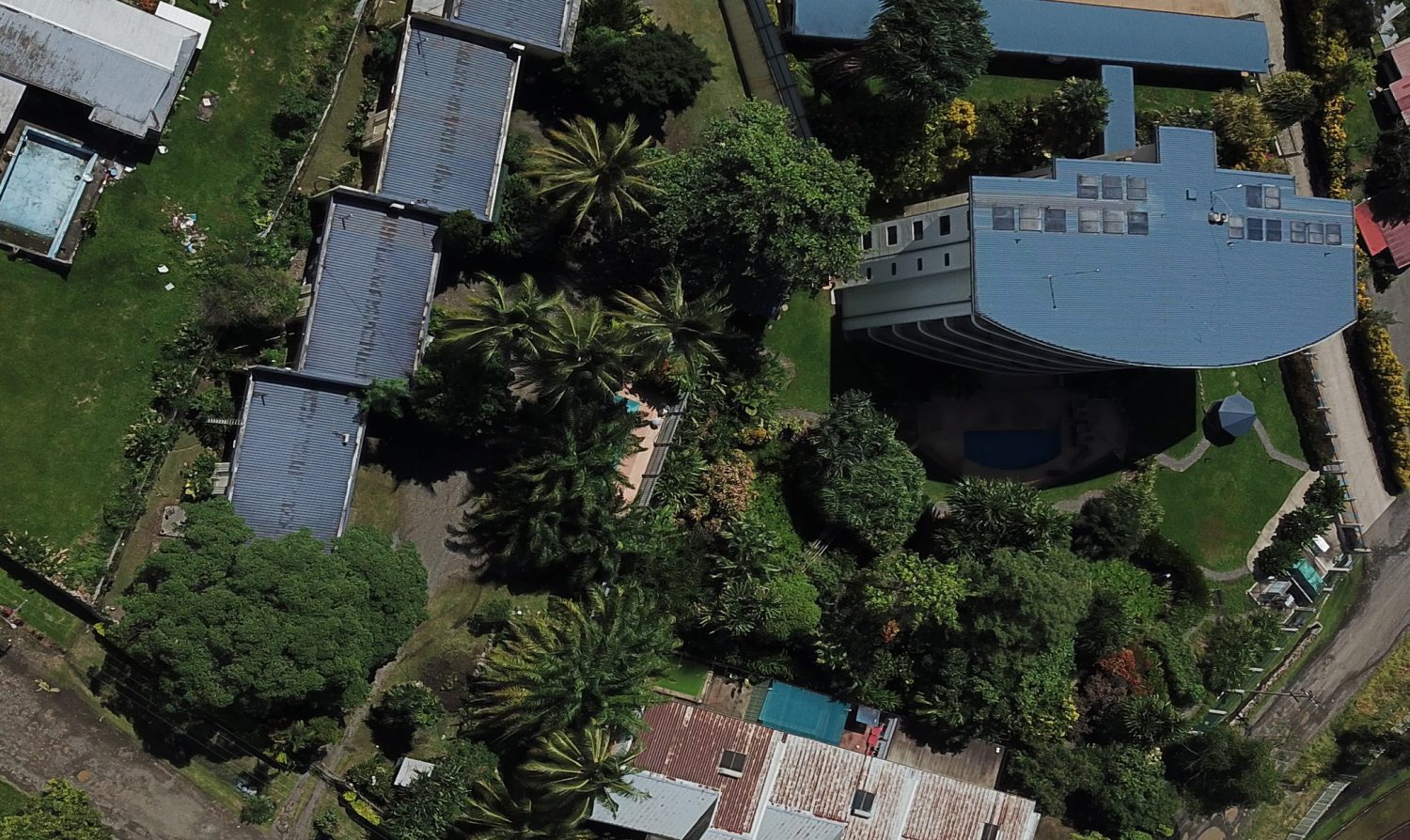
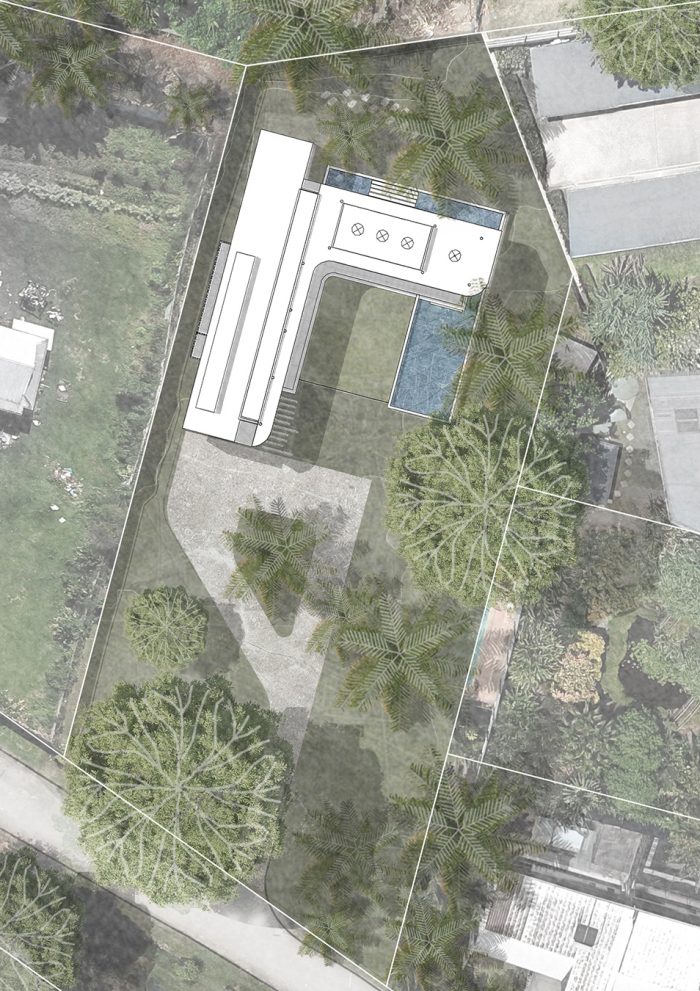
The house is organised as a self-contained composition within a planted landscape, orientated to prioritise internal garden views while limiting exposure to surrounding properties. Existing mature trees are retained as key spatial anchors, providing both visual screening and environmental structure to the site.
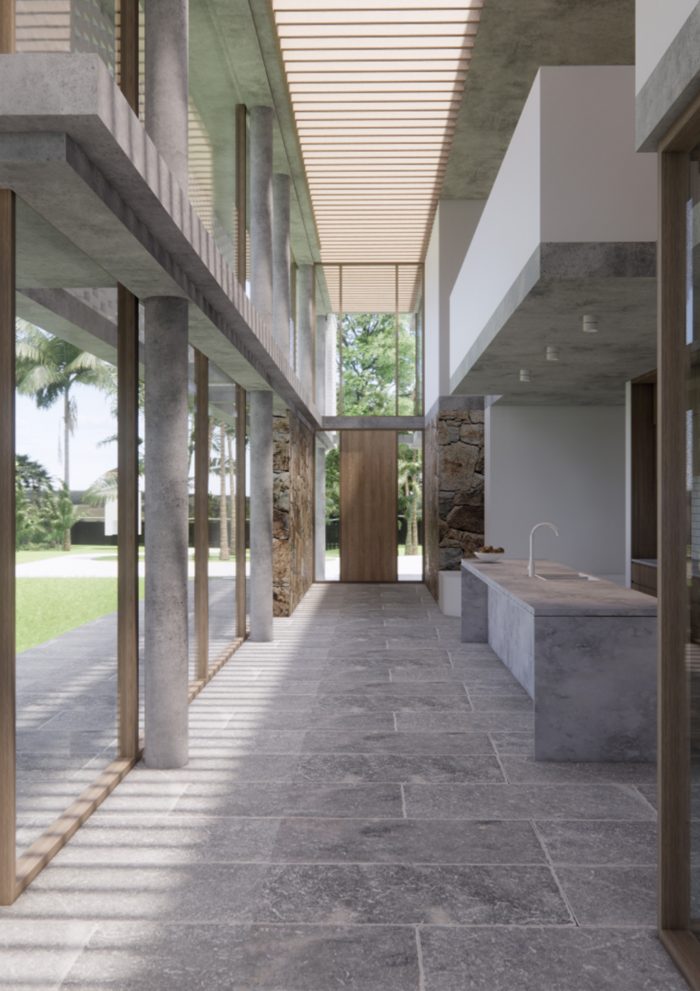
The plan is configured as a clear gradient of privacy, with public living and entertaining spaces positioned at ground level and more private zones arranged above. This vertical organisation establishes separation between communal and intimate functions while maintaining continuous visual connection to landscape.
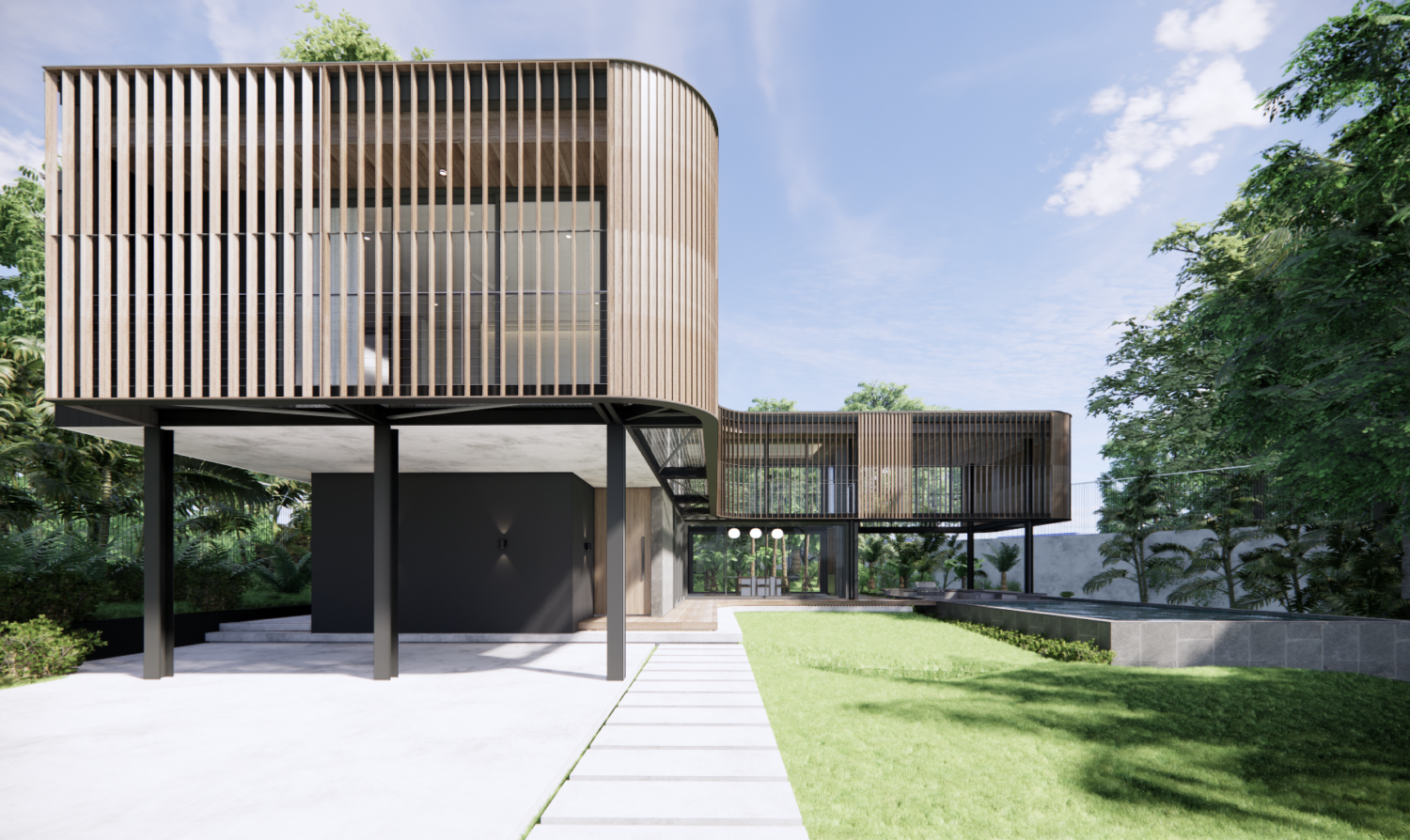
The building is articulated as an L-shaped form, positioned to create a defined arrival sequence from the driveway and to establish two primary outdoor rooms: an open lawn and pool terrace to the front, and a more contained tropical garden with productive planting and play areas to the rear.
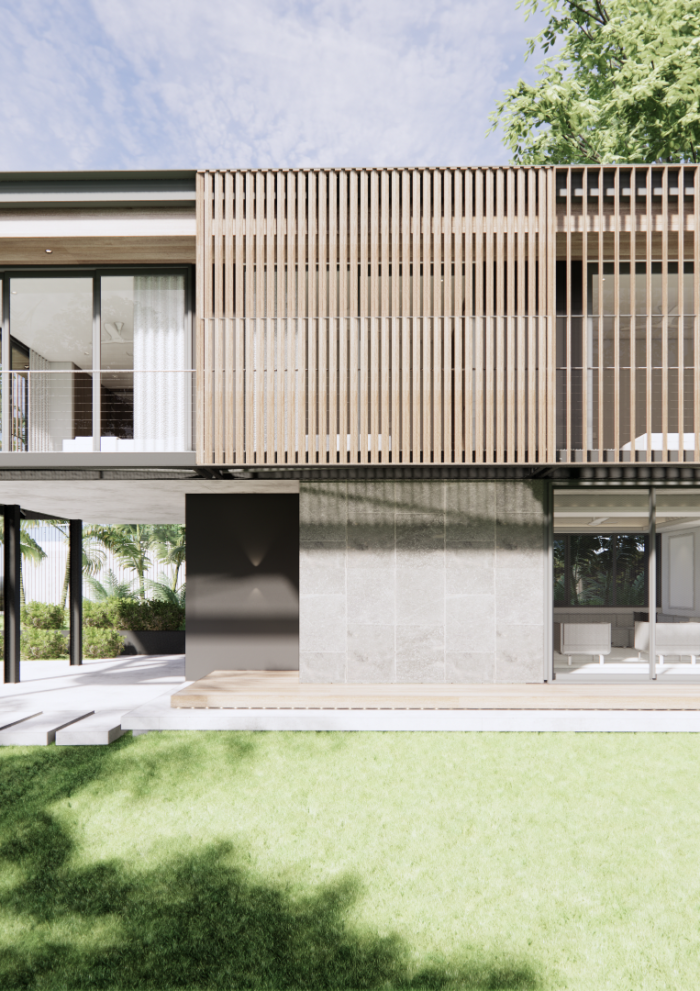
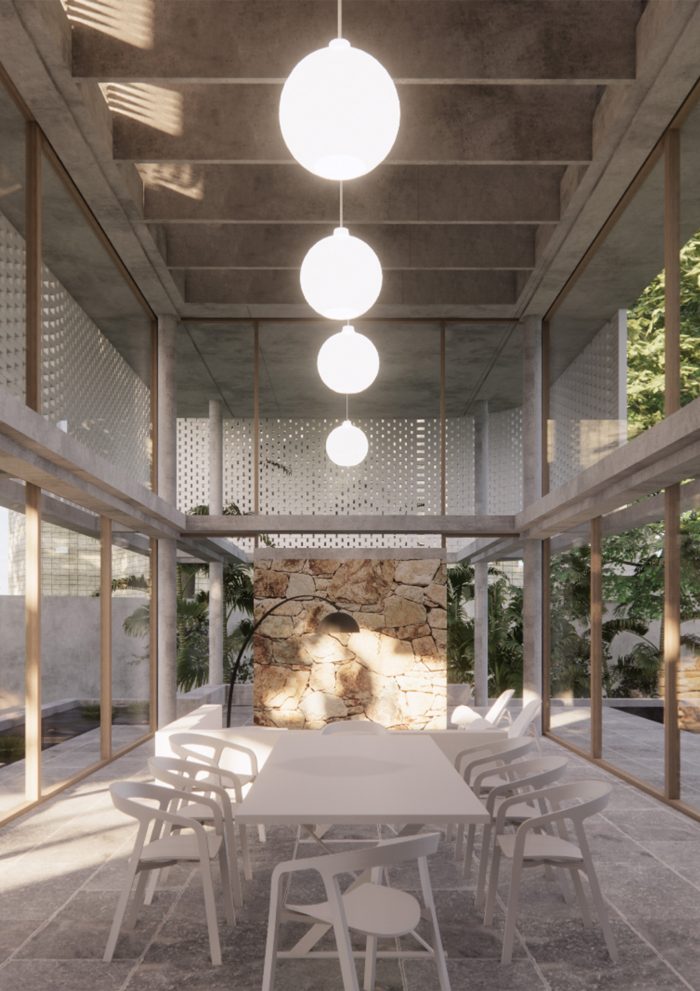
The upper level is screened to provide privacy and solar control, with a perforated masonry façade forming a continuous envelope that modulates light, air and visibility while reinforcing environmental performance in a tropical context.
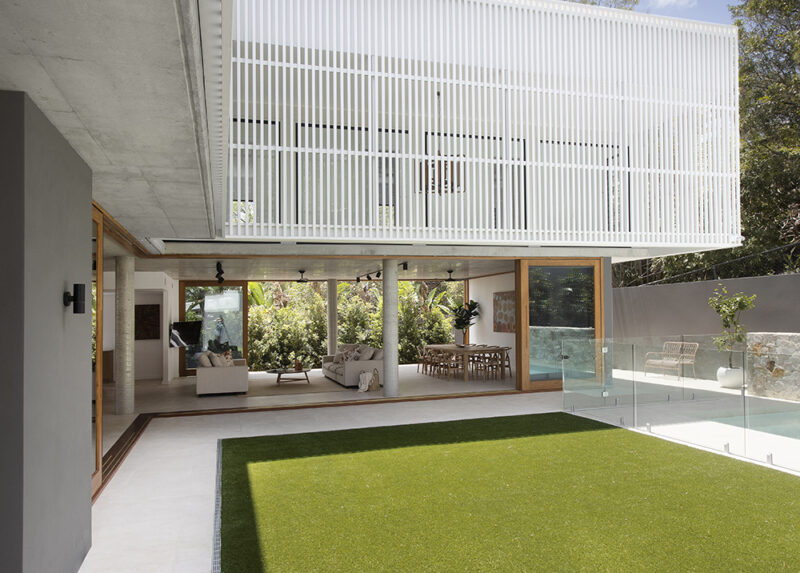
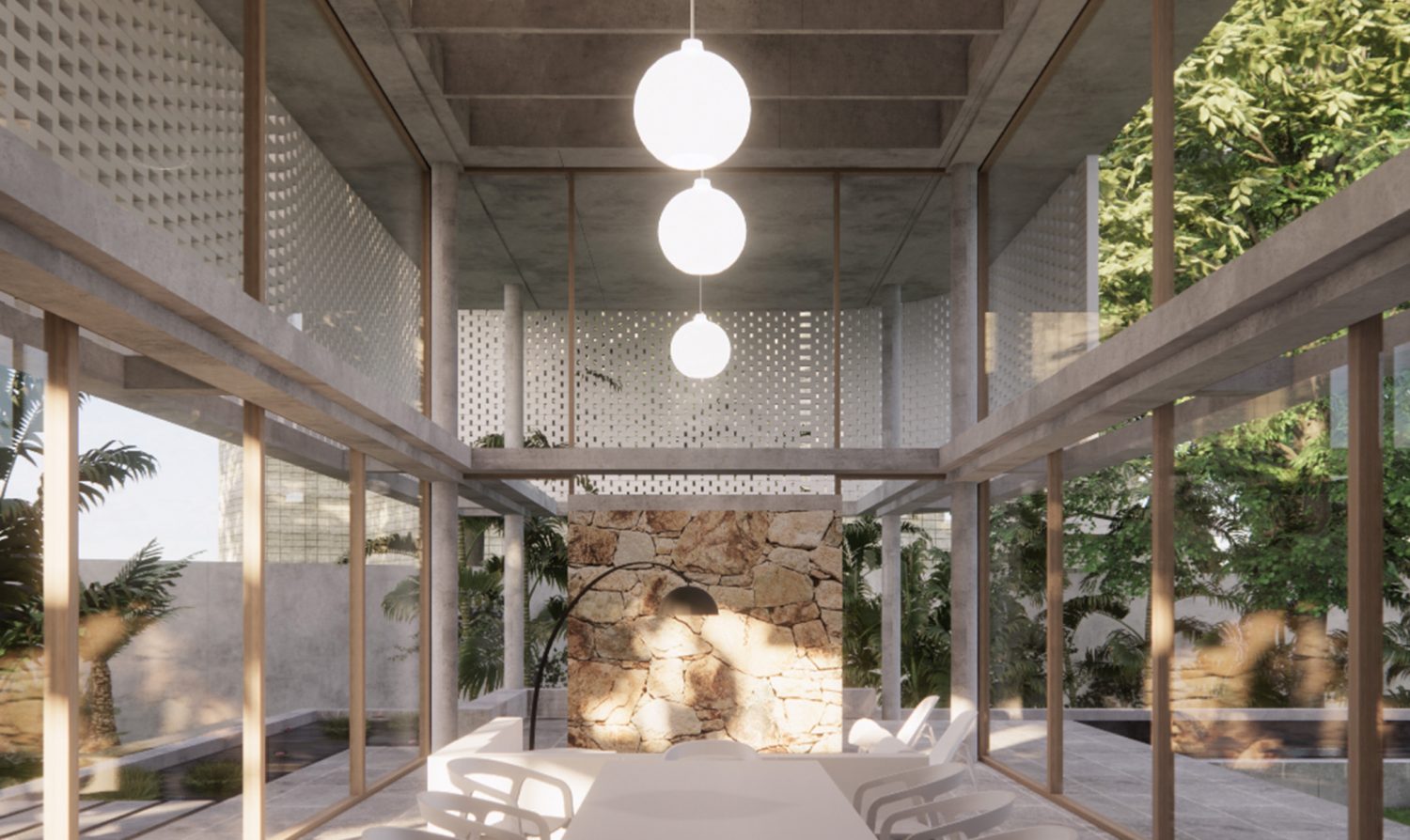
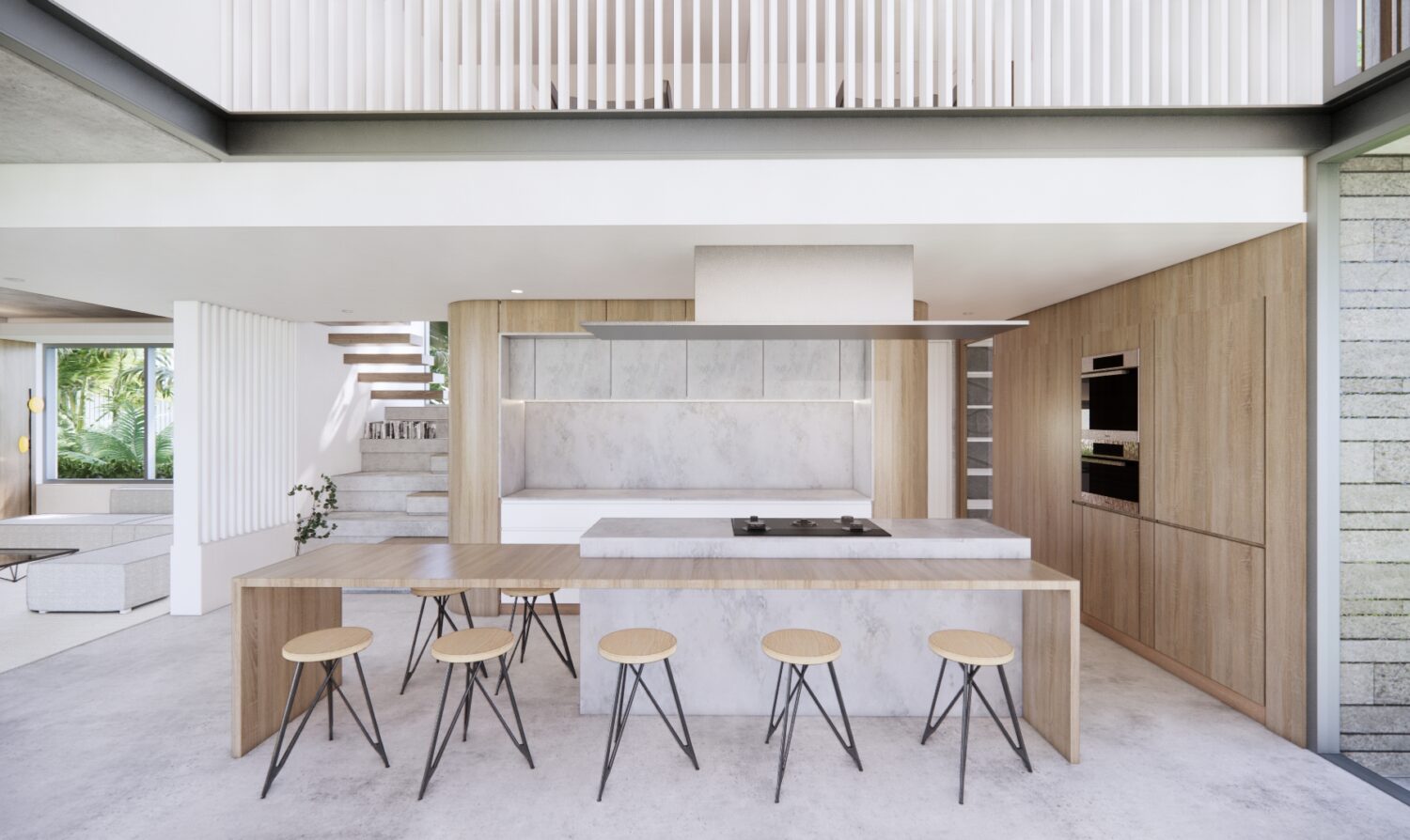
Internally, double-height volumes are strategically introduced to support cross-ventilation, enhance natural light penetration, and strengthen the visual connection between internal spaces and curated landscape views.
Project details
Status
Project Type
Location
Floor area
Photography
Architectural Team
Engineering Team
Materials
Exploring Site and Concept Option 1#
Concept 1 proposes a two-storey configuration that establishes a clear vertical gradient of privacy and security across the dwelling. The building is positioned high on the site and articulated as an L-shaped form, defining its relationship to the driveway and establishing a strong geometric response to the topography. This arrangement separates public and private functions across levels while reinforcing the building’s presence within the landscape through a controlled and elevated siting strategy.

Exploring the Site; Concept Option 2#
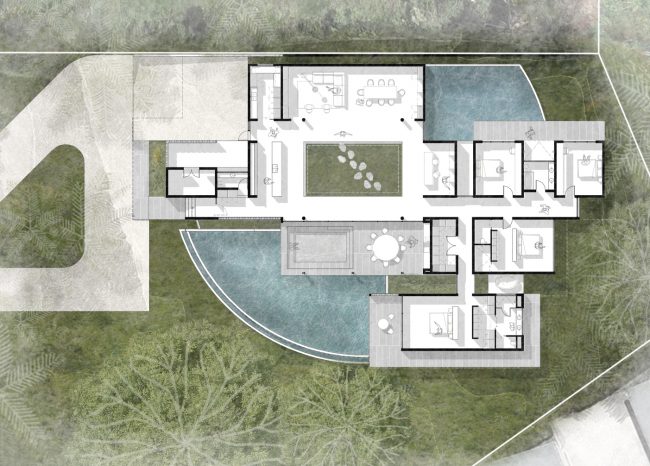
Concept 2 proposes a single-storey arrangement that explores how privacy and security can be achieved within a horizontal spatial configuration. The architecture is organised as a series of pavilions distributed within the landscape, drawing on local vernacular references and reinterpreting them through a contemporary architectural language. A clear spatial hierarchy defines the plan, with functions arranged to transition progressively from public to more private conditions as one moves through the sequence of spaces.