Ellis


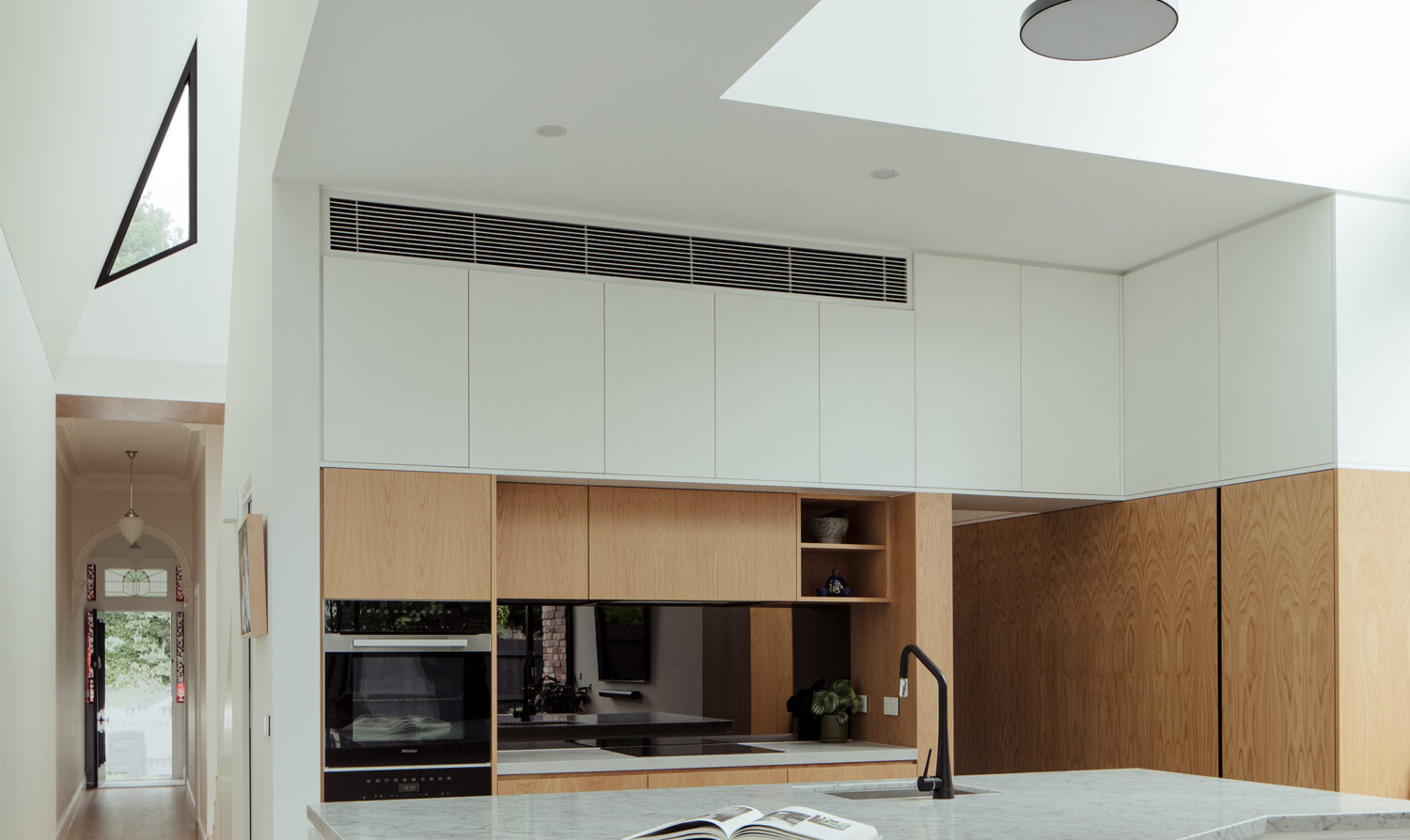


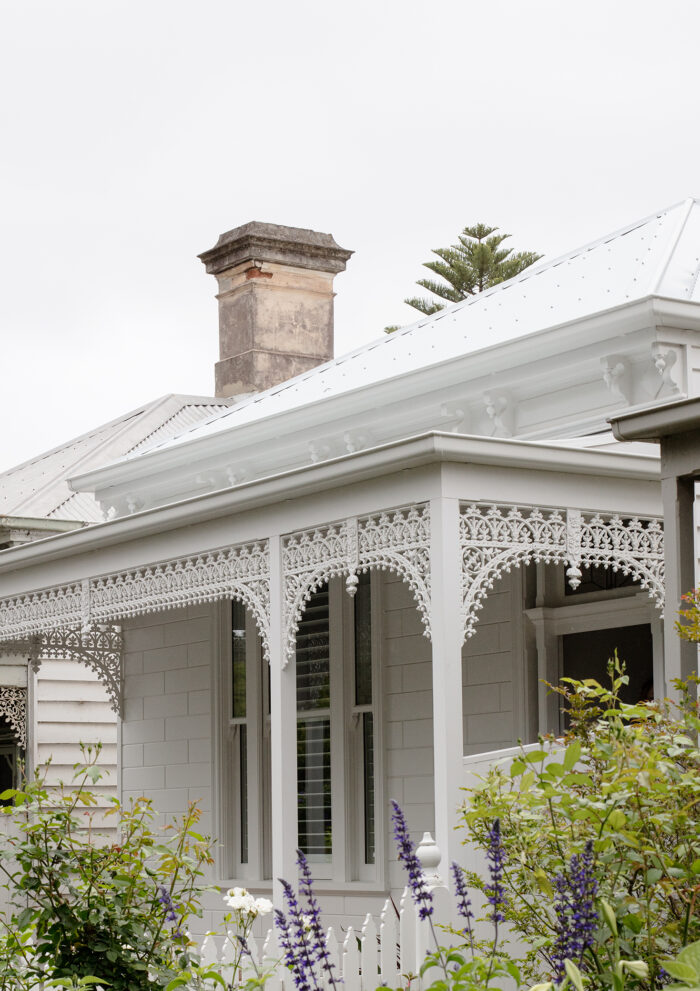
Ellis House is a renovation of a Victorian weatherboard cottage typology in Melbourne’s inner suburbs. The project reconfigures the existing building to improve spatial clarity, natural light access and connection to the garden, while retaining the character of the original structure.
The extension is organised to open the house towards the rear landscape, introducing a series of spatial interventions that bring light deeper into the plan and create clearer relationships between internal zones.
Set on a narrow six-metre-wide site, the addition is compact and highly efficient, structured through a series of precise architectural moves that maximise spatial volume and environmental performance.
A linear light shaft extends through the full depth of the extension, drawing natural light into the lower level and defining the primary organising axis of the new work. A secondary void above the kitchen connects upper and lower levels, establishing visual continuity between the children’s spaces and the main living areas.
Sharp geometries and carved voids are used to articulate spatial transitions, creating moments of compression and release throughout the plan.
The kitchen and living areas are arranged as a continuous social space, with integrated joinery and seating elements providing informal gathering points and additional storage within the architectural fabric.
The extension is deliberately contrasted with the existing cottage, reinforcing a clear distinction between heritage fabric and contemporary intervention. While referencing the material language of the surrounding Victorian context, the new work adopts a restrained palette of recycled brick, painted timber and concrete, resulting in a layered yet controlled material composition.
Project details
Completed 2021
Project Type
Location
Floor area
Photography
Architectural Team
Construction Team
Materials


Initial Concepts
Telling and illustrating the story is important to us at concept stage to ensure that we can fully translate all of the subtleties of an idea.

Setting the Scene
Setting the scene and describing daily activities through drawing, start to bring life to the spaces but allow clients to engage and inform the process and the spaces without them being too designed or rigid...

Translation to CAD
As we work through concept the design starts to become more developed with more detail and materiality added

