Taringa
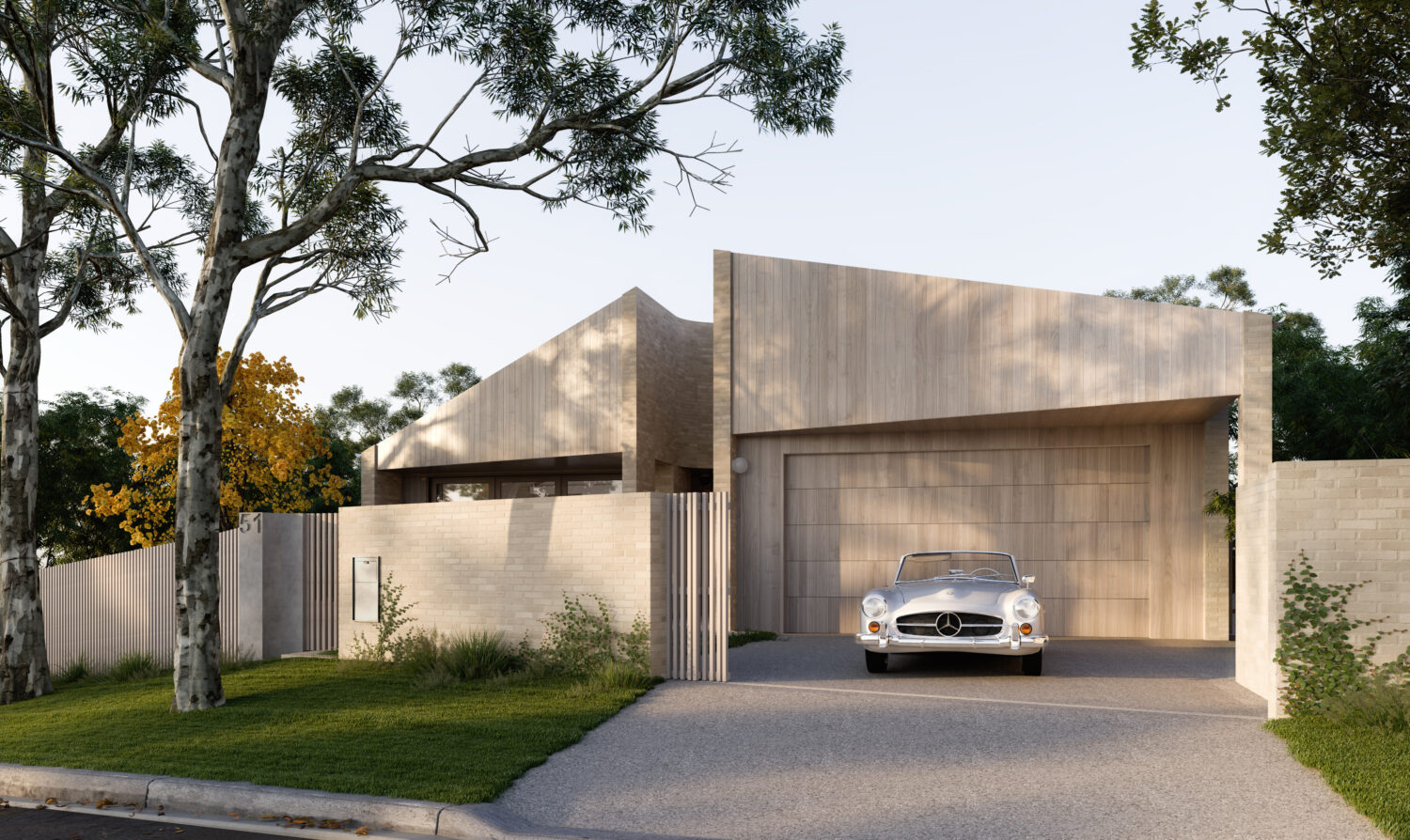
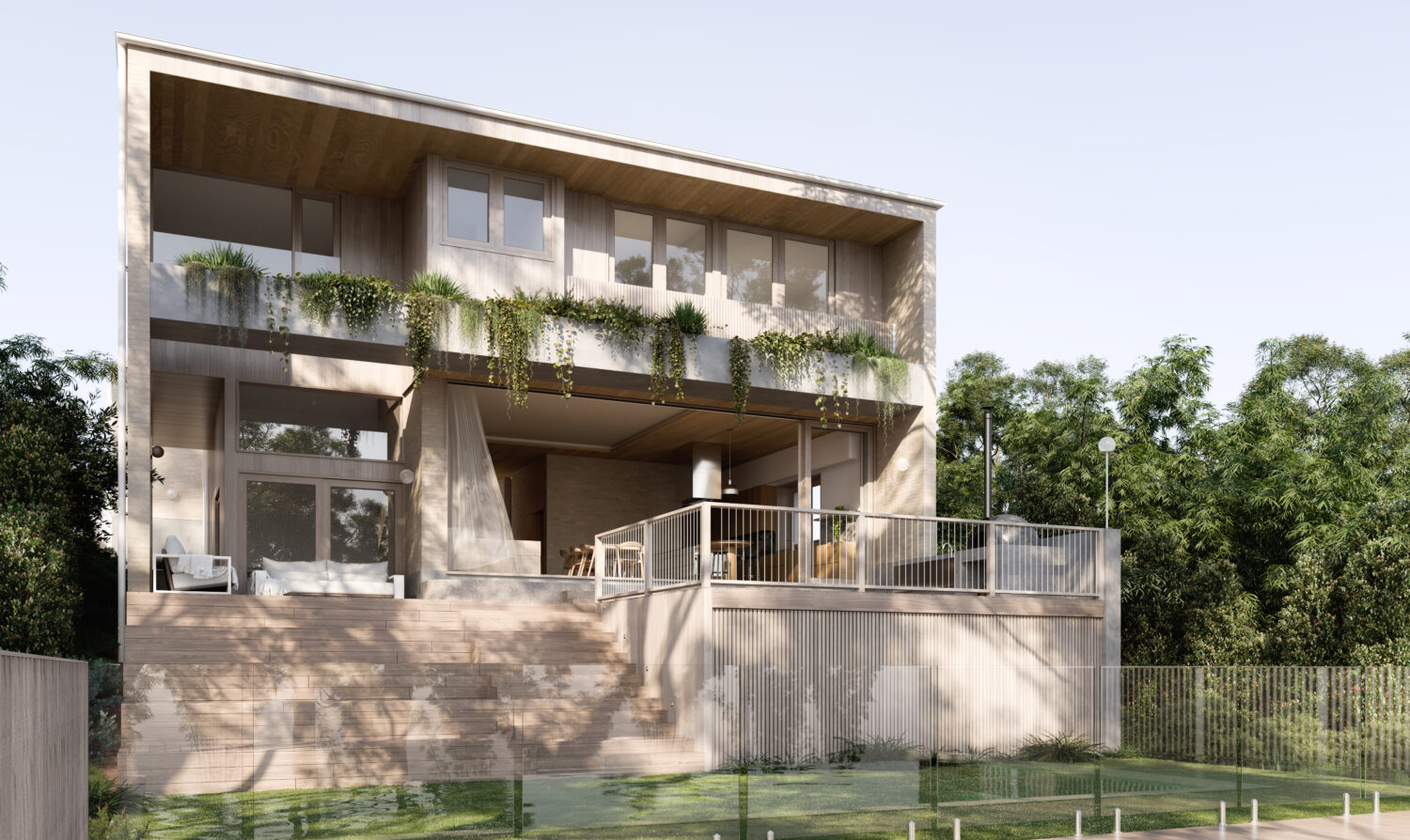
Set on a sloping site in leafy Taringa, this Passivhaus residence is defined by a careful orchestration of mass, volume and light. The home is conceived as a highly efficient family dwelling, where environmental performance and spatial clarity are integrated into a single architectural language.
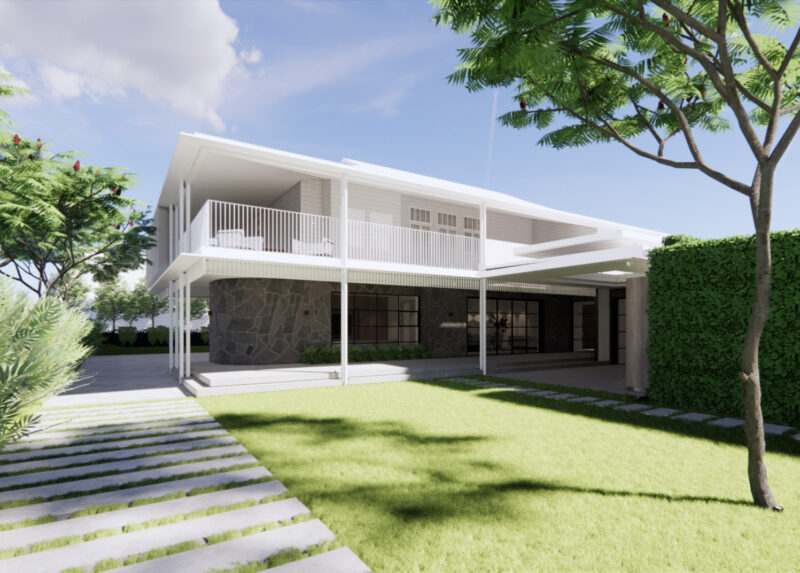
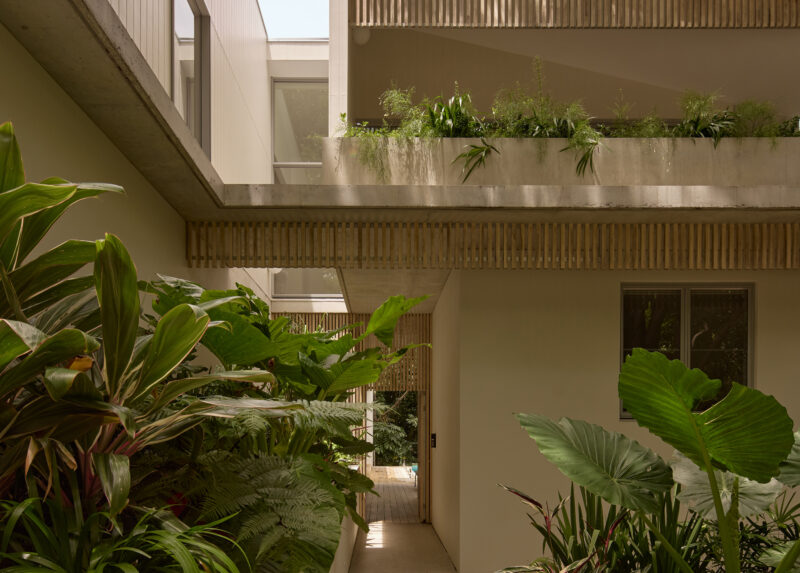
The building is composed of interlocking brick, timber and concrete volumes that anchor the residence to its site while enabling a refined internal organisation. From the street, the house presents as a restrained composition of solid forms, articulated through subtle shifts in depth, shadow and proportion, offering limited but controlled visibility into the interior.
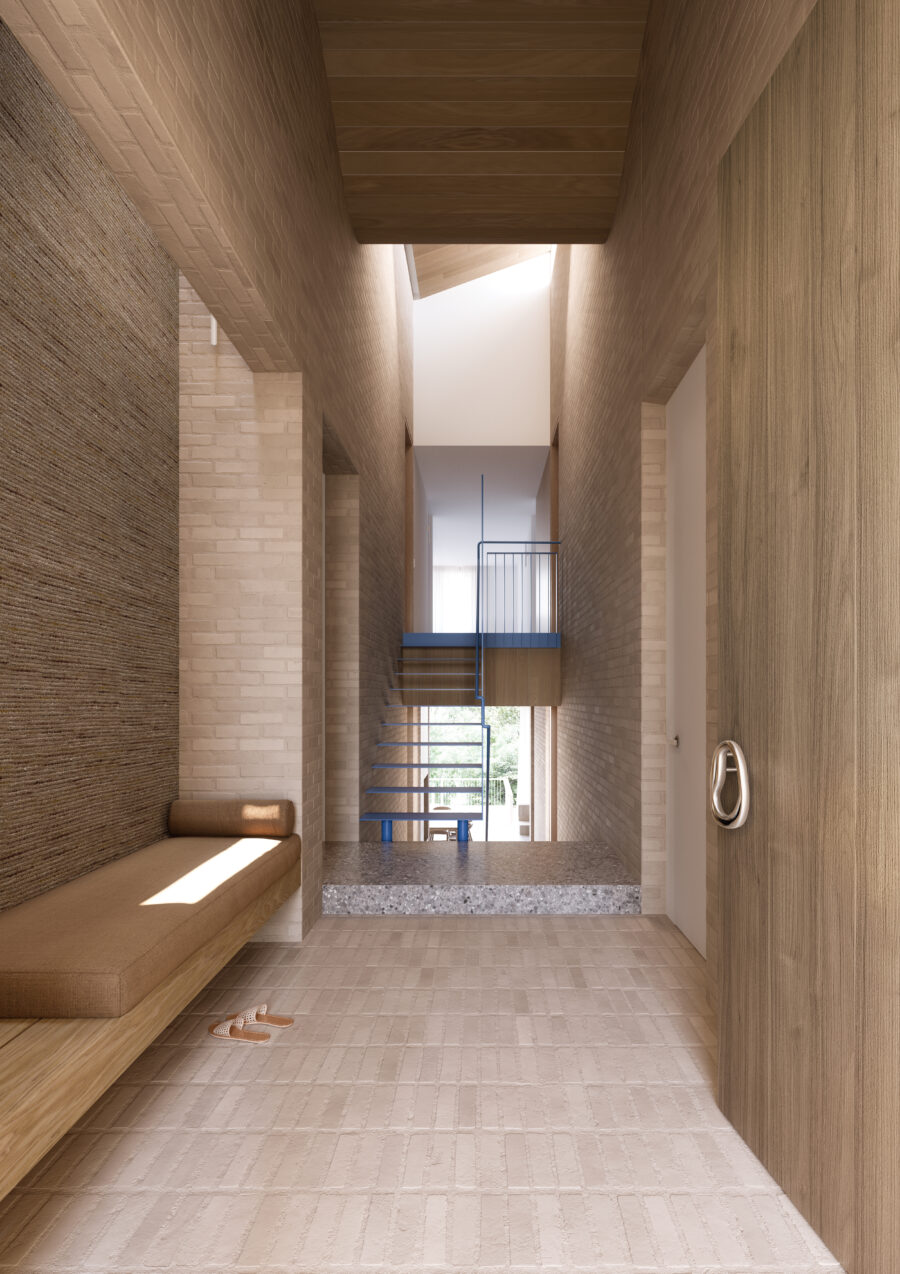
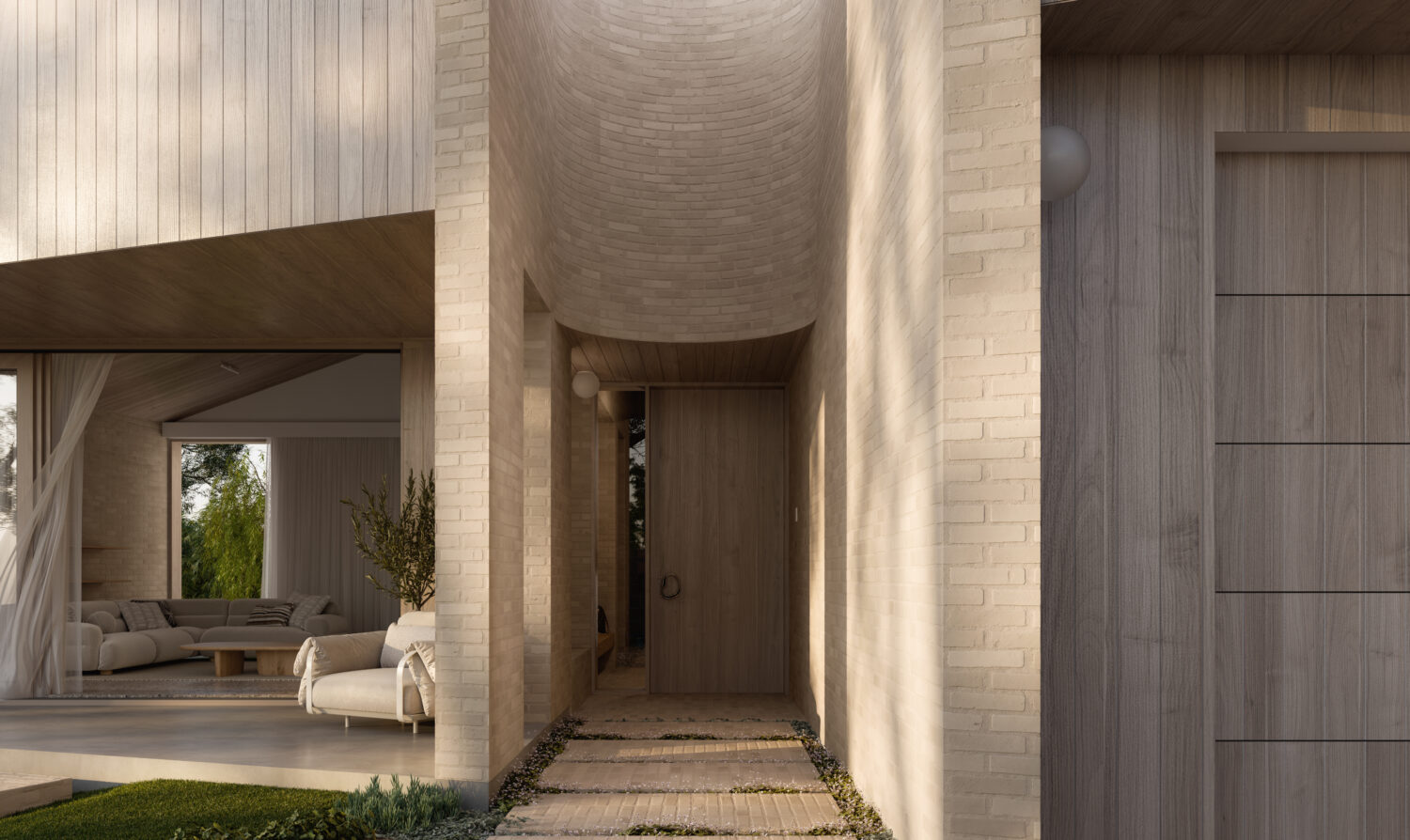
Entry is compressed through a curved brick passage that establishes a clear spatial threshold before opening into the main living spaces. This transition sets up a deliberate contrast between enclosure and release, structuring the experience of arrival.
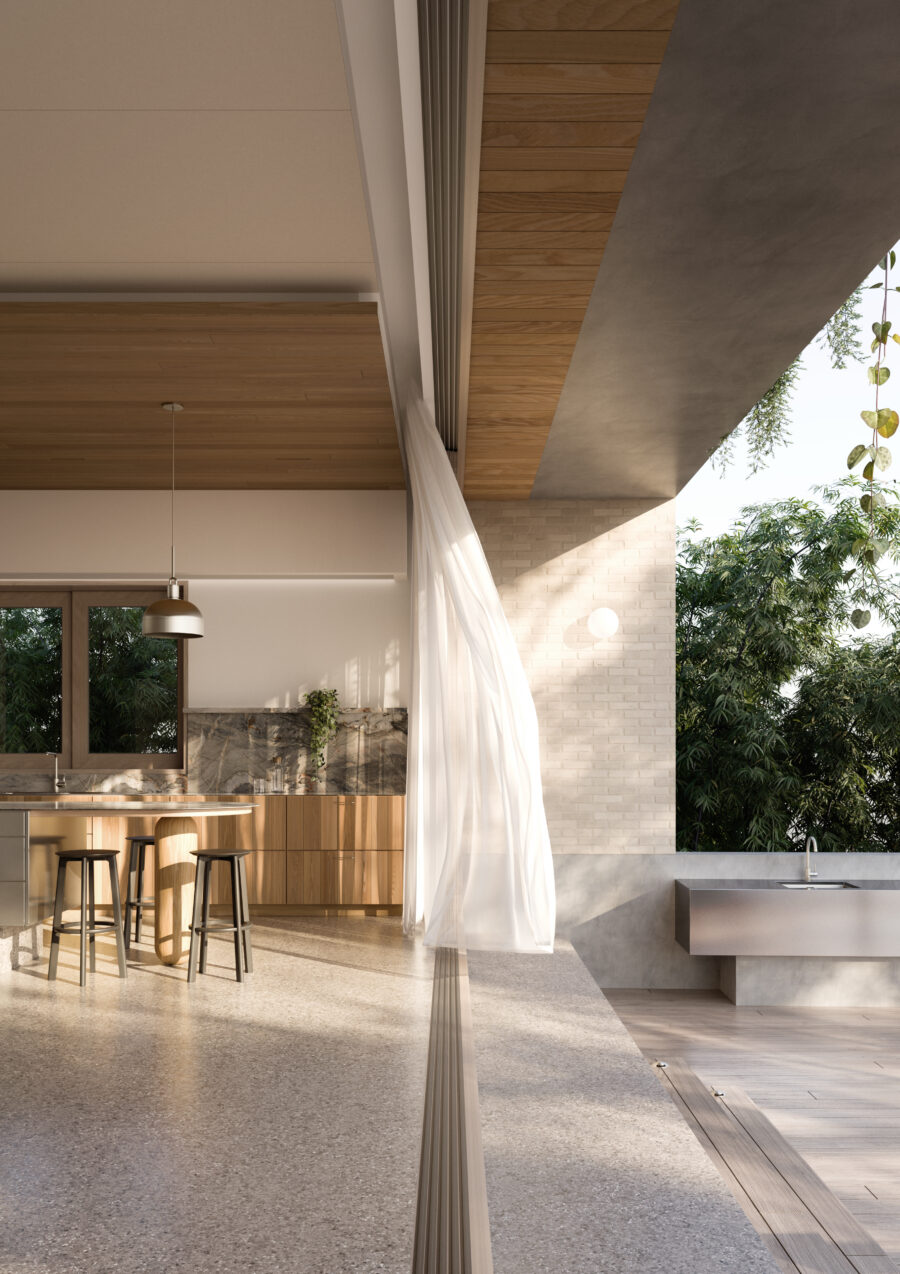
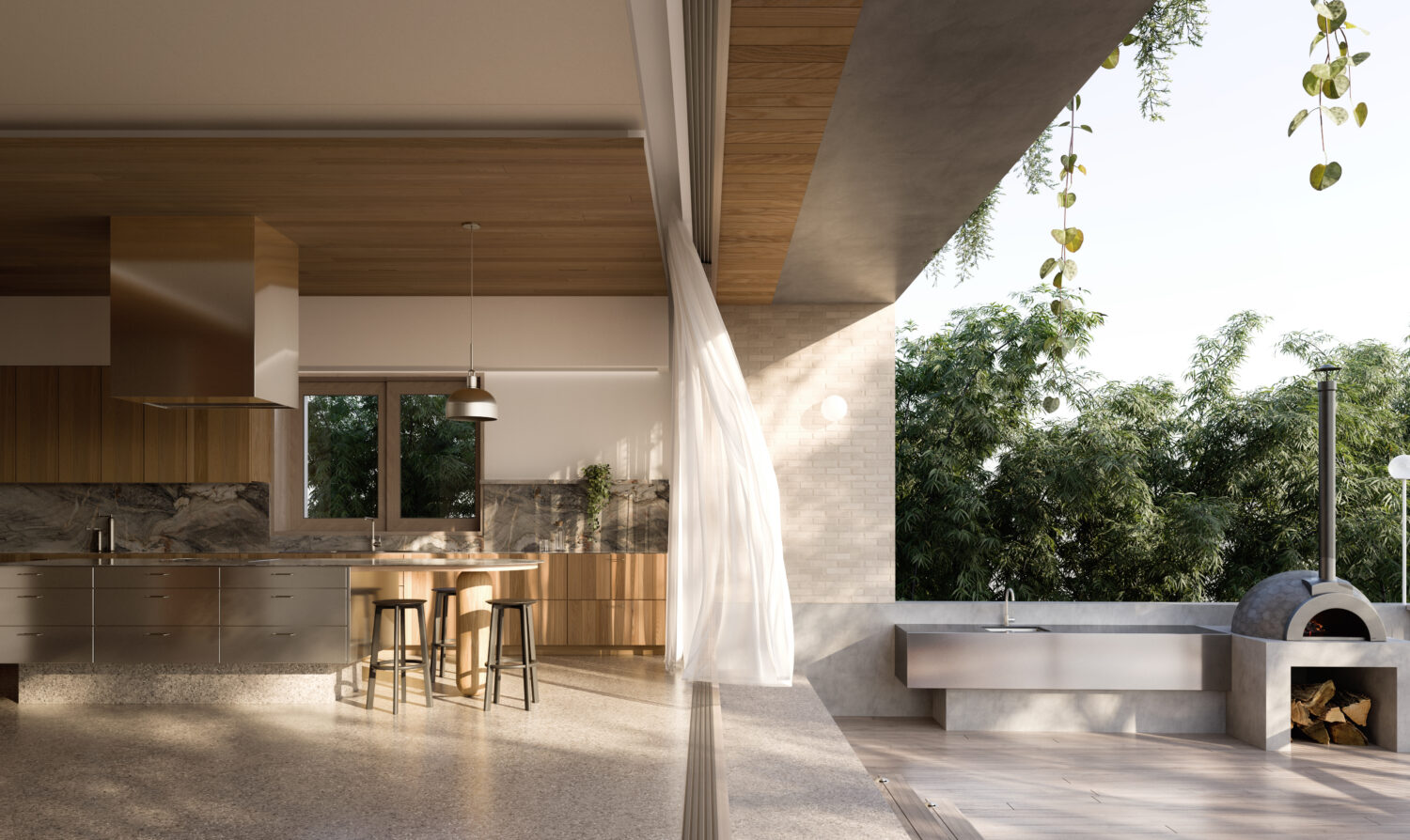
Internally, the plan is organised to respond to solar orientation, natural ventilation and family occupation patterns. Living spaces extend towards treetop views, while more intimate zones are embedded within heavier, more grounded material conditions. A continuity of material across internal and external surfaces reinforces spatial cohesion and environmental stability.
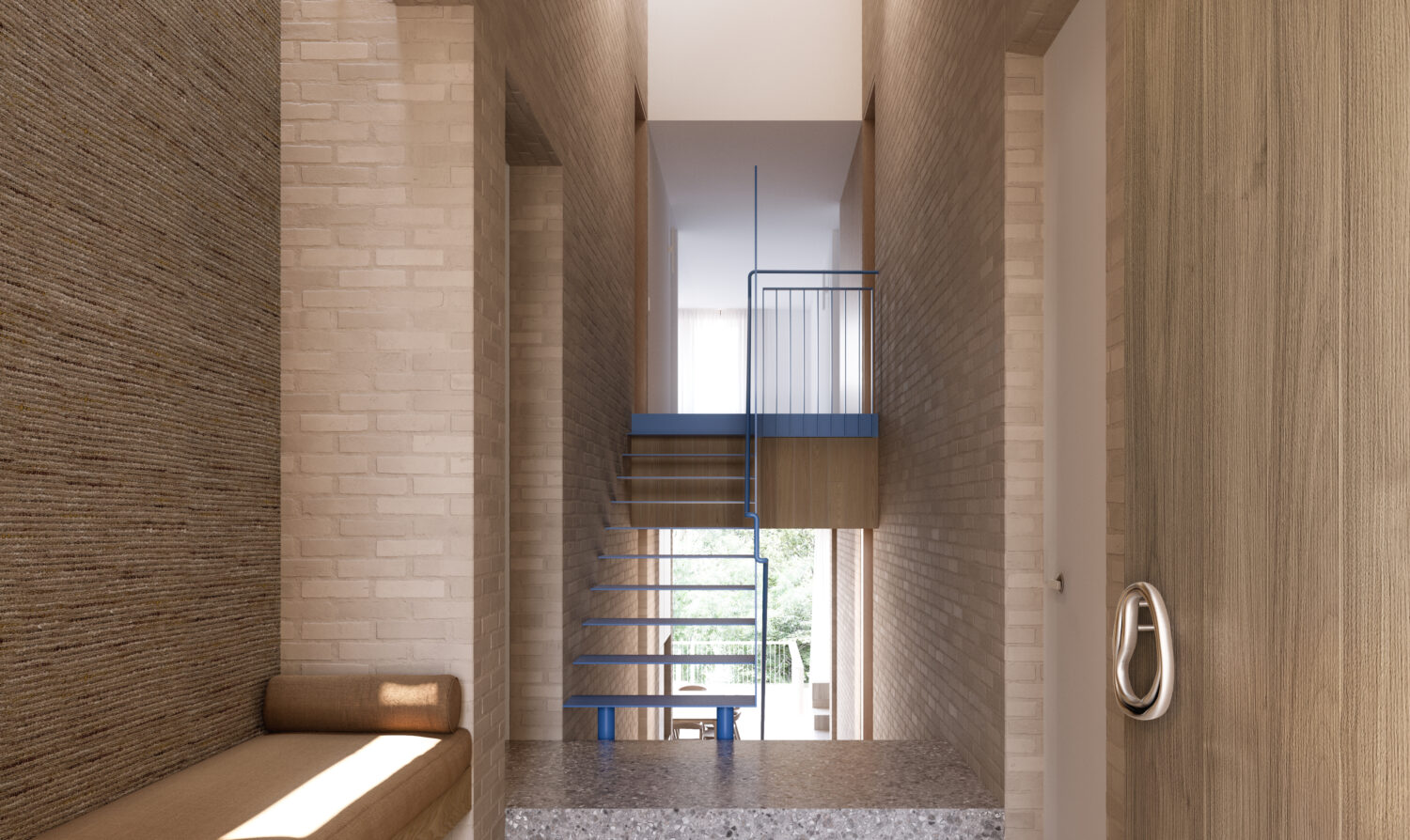
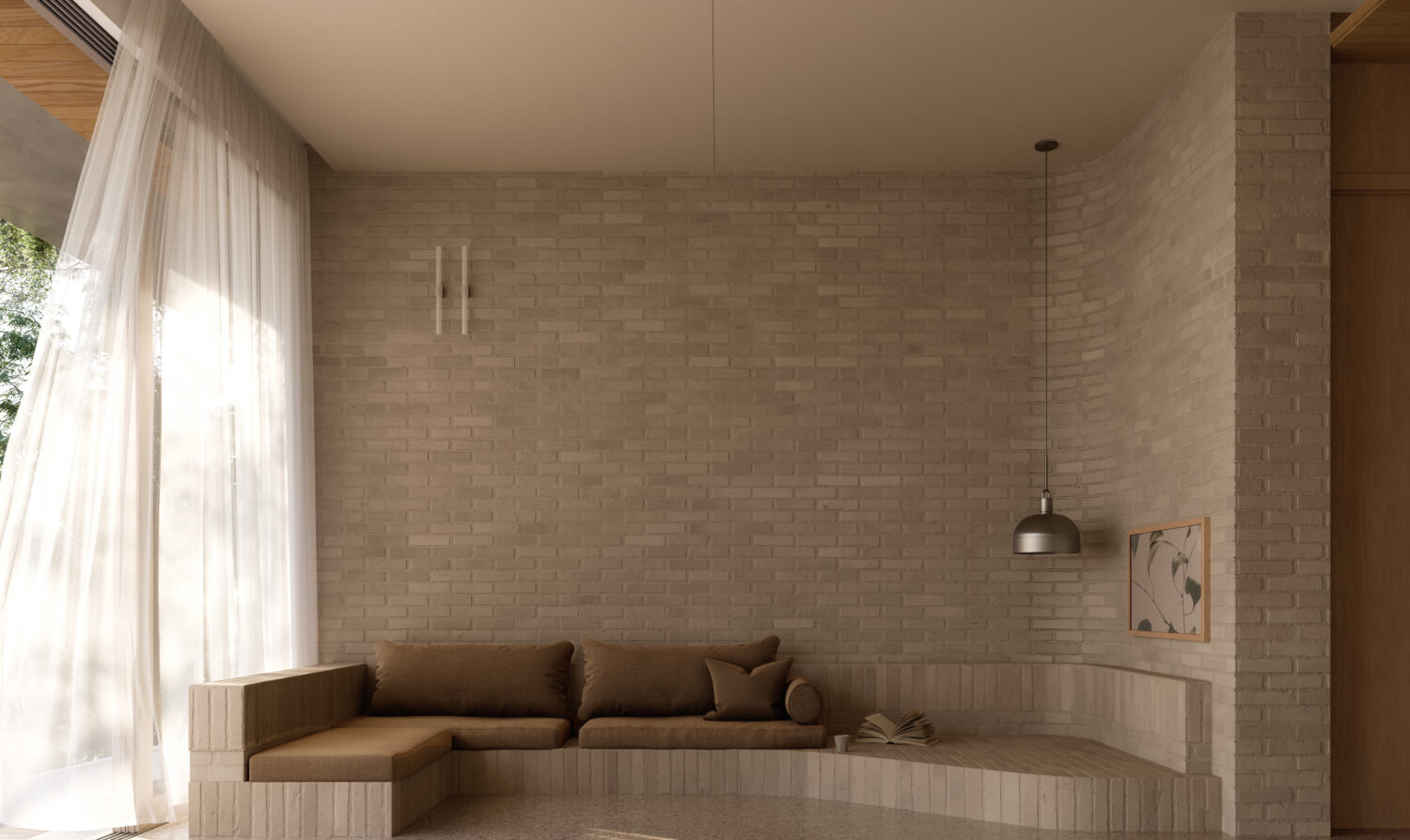
Key moments within the house are defined through precise spatial and material interventions. A steel stair is set within a light-filled vertical void, providing visual and physical connection between levels. A built-in seating element is integrated into the brick structure, introducing moments of pause within the spatial sequence. These elements are embedded within the architecture rather than applied, contributing to a consistent language of construction and use.
The project is guided by passive design principles, with careful attention to orientation, envelope performance and thermal stability. Sustainability is not treated as a separate agenda, but as an integrated condition shaping form, materiality and spatial arrangement.
The result is a highly resolved family residence defined by clarity of planning, material discipline and environmental responsiveness—where performance and spatial experience are fundamentally aligned.