Lae House – Pavilion Concept
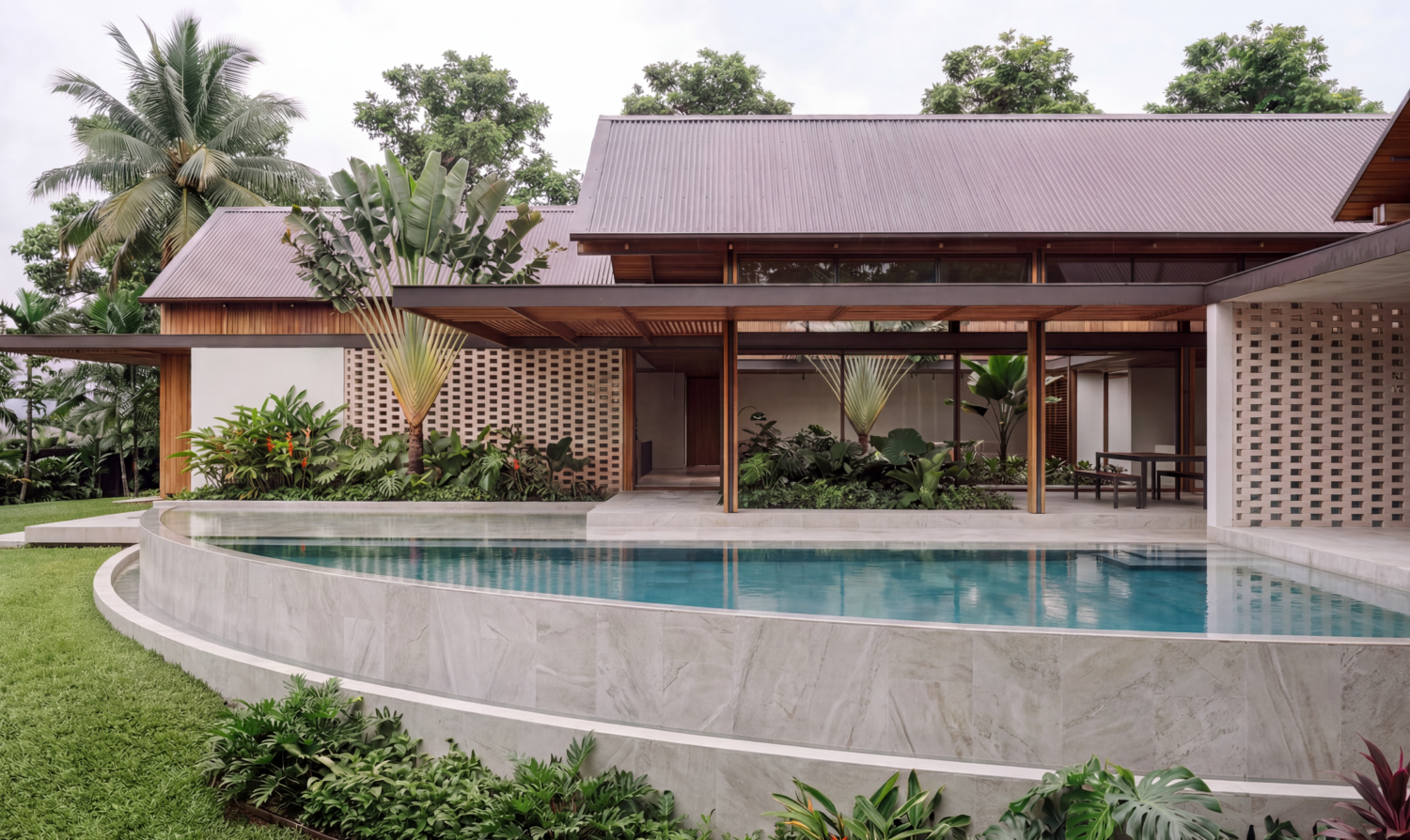
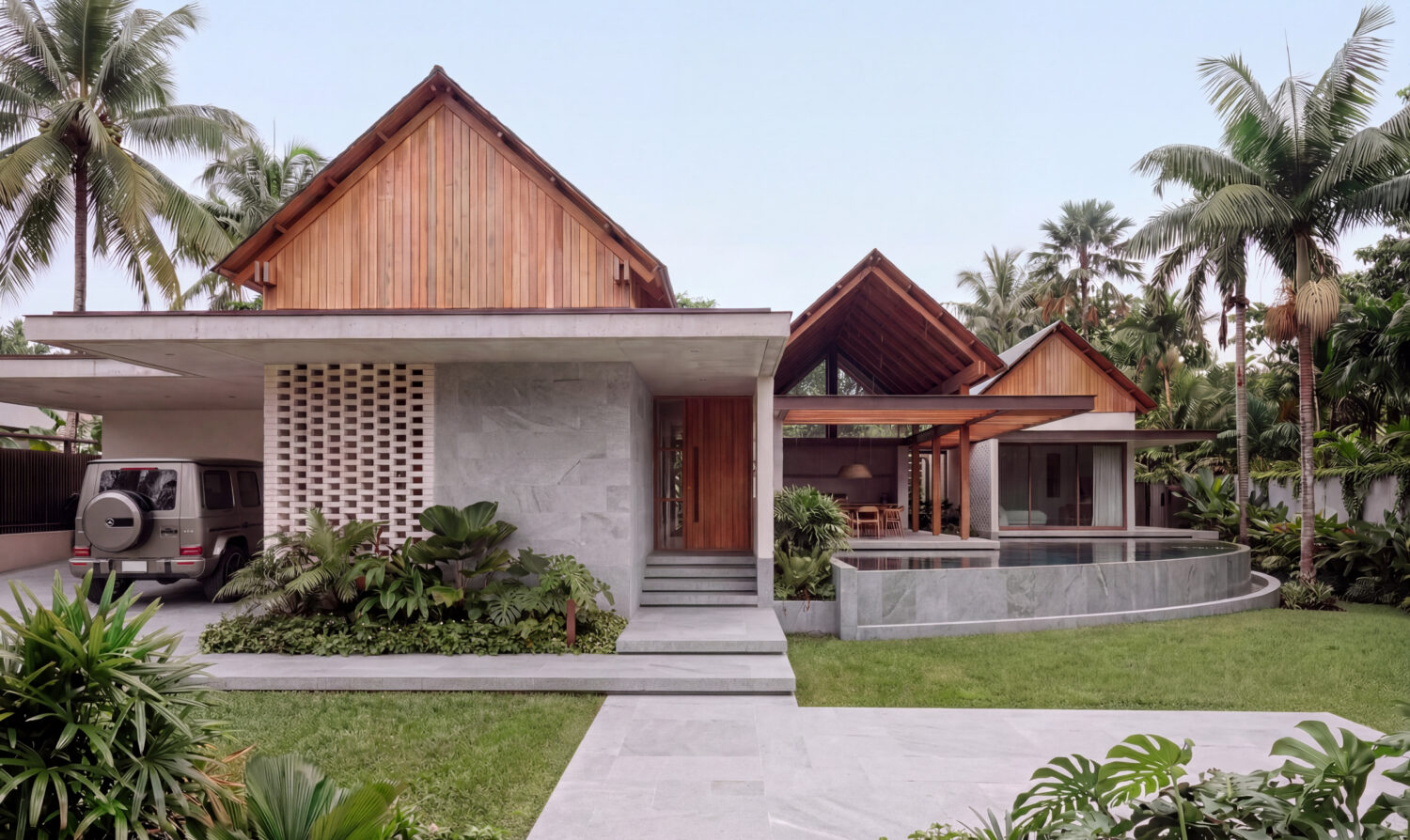
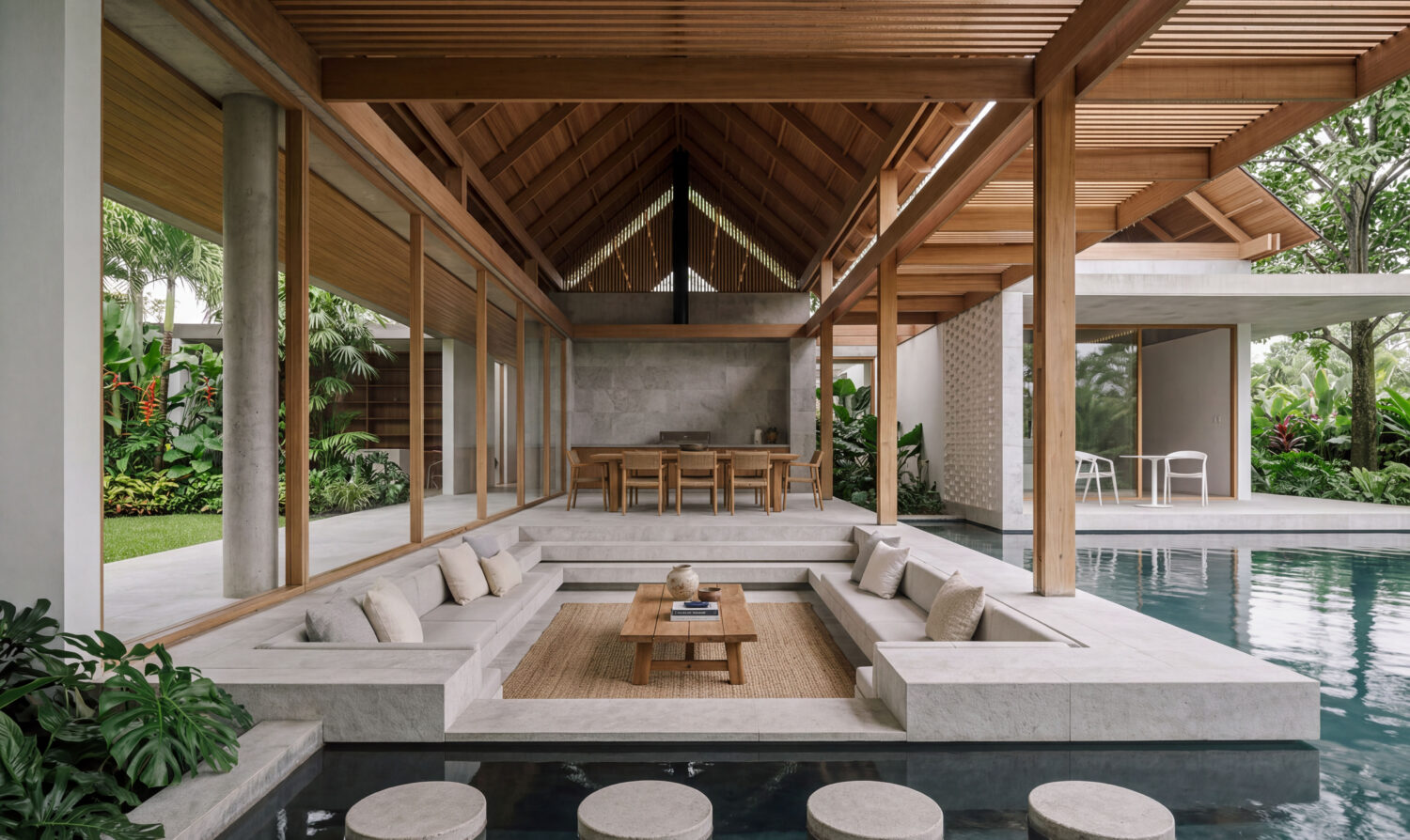
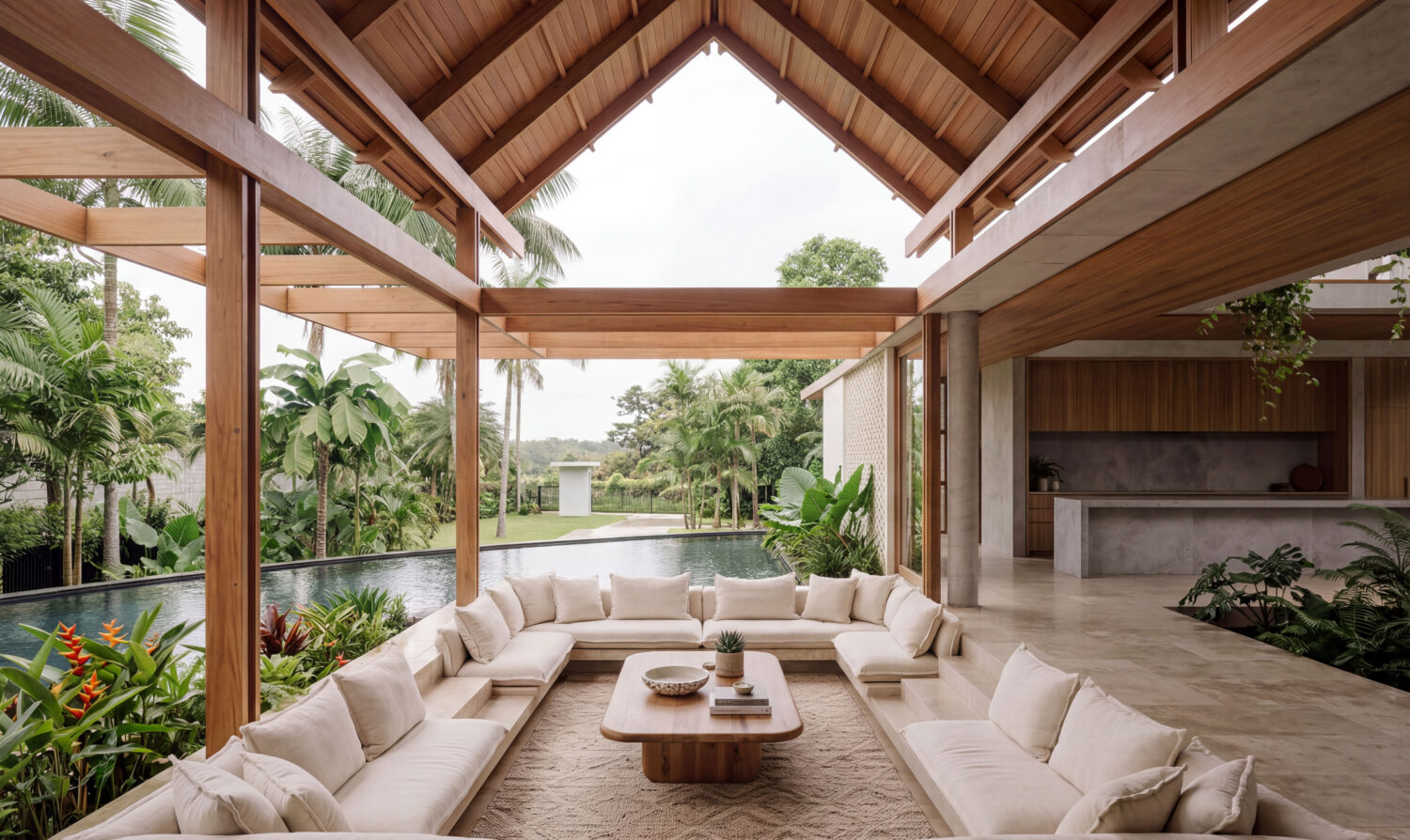
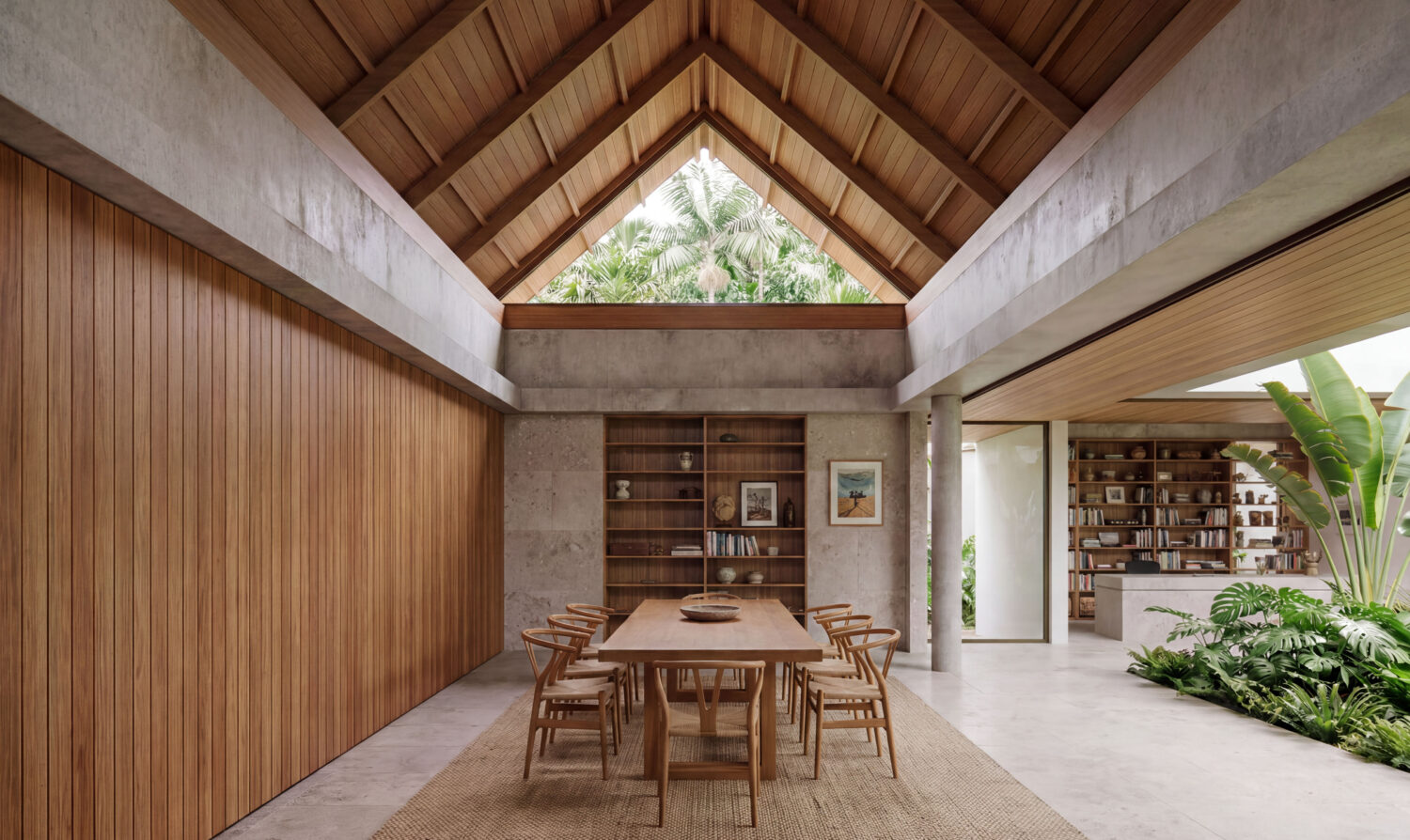
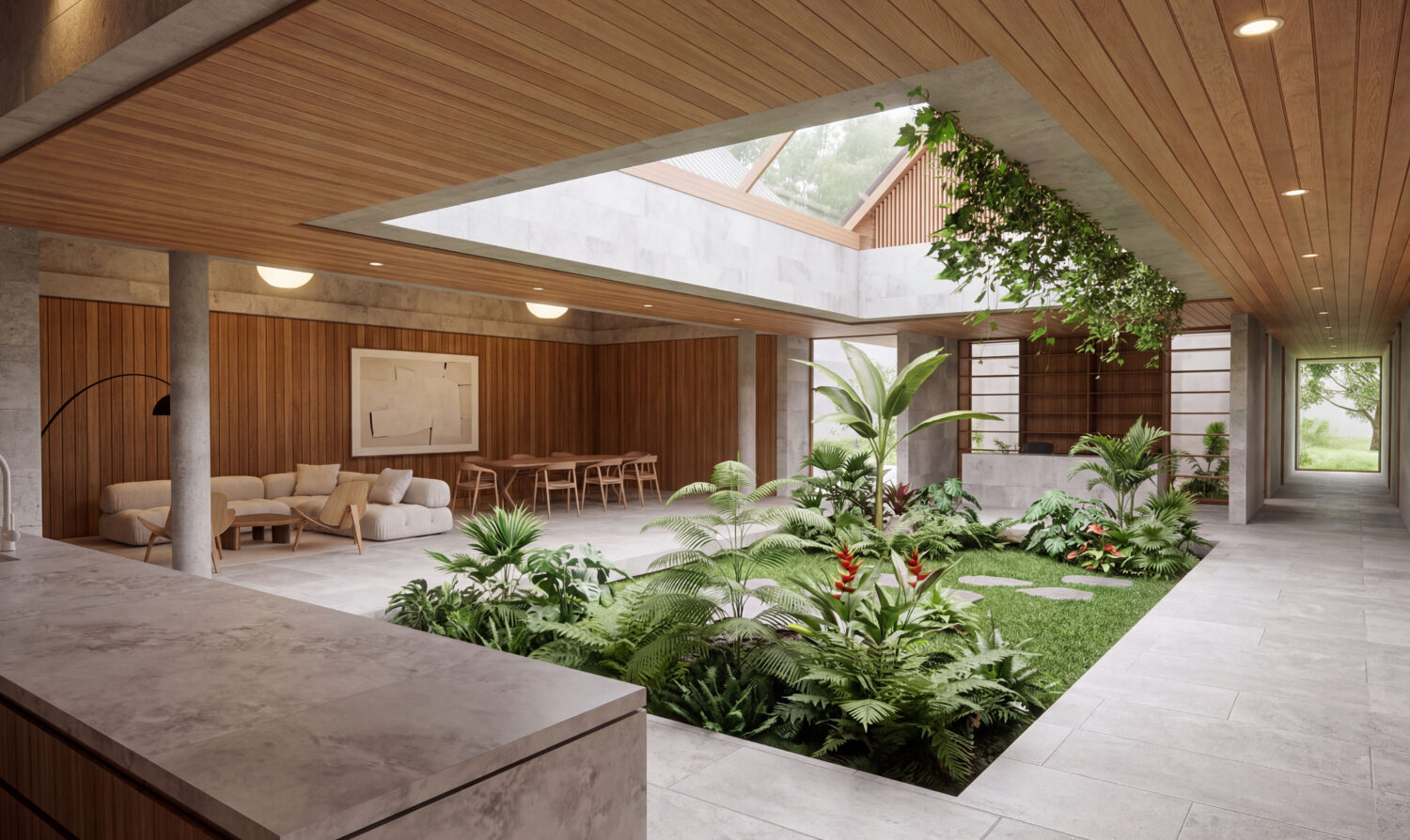
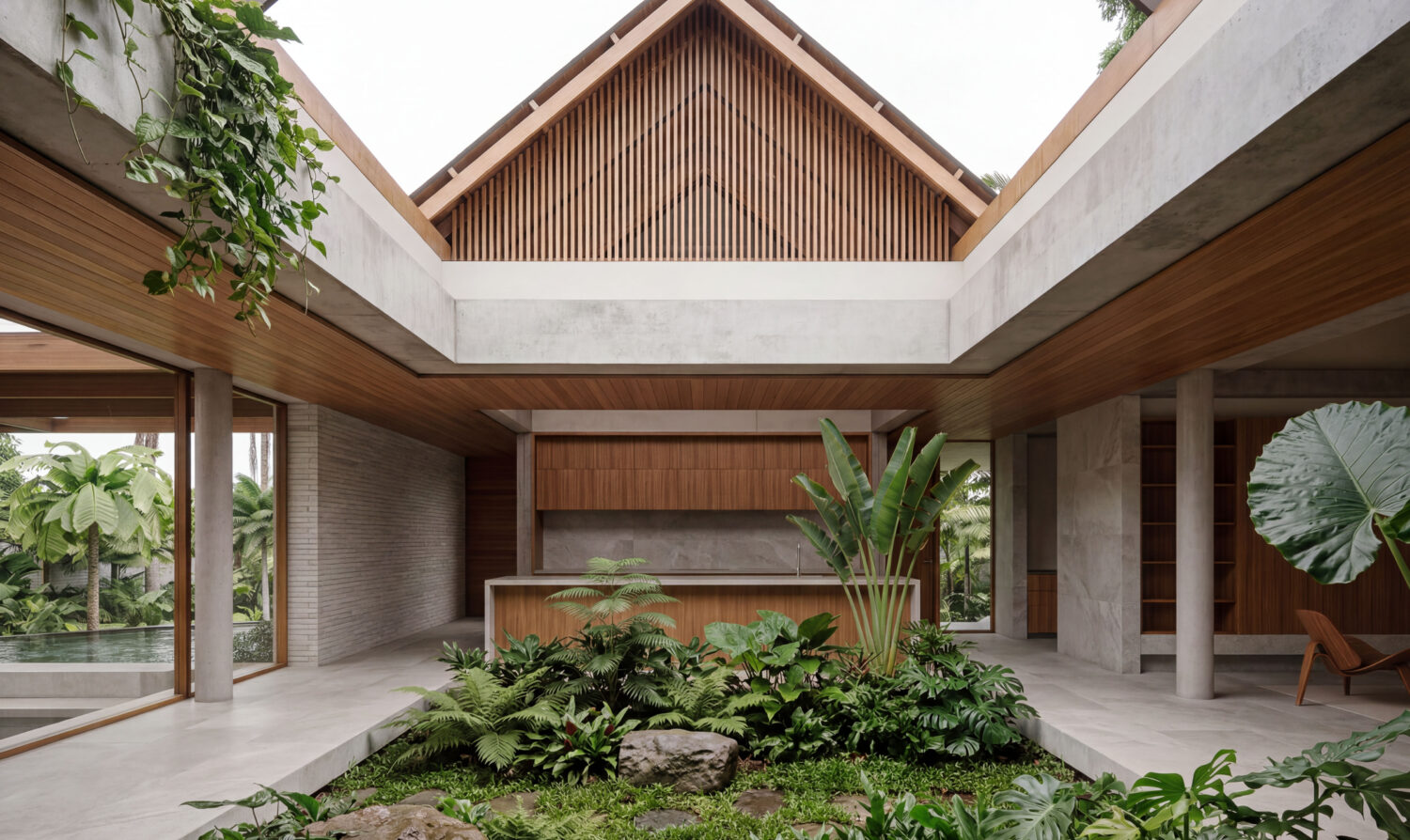
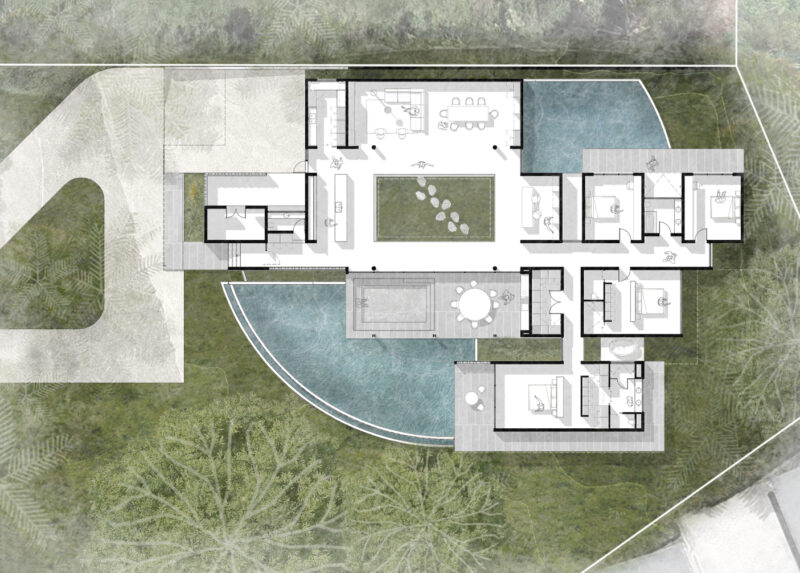
Our Lae Courtyard Pavilion House concept is the second of two options that we explored as an alternative response to the tropical environment of Lae, Papua New Guinea. Rather than organising the home as a single architectural object, the design dissolves the building into a series of interconnected pavilions arranged within a carefully composed tropical landscape.
The concept begins with the belief that, in this climate, landscape should become the primary living environment rather than simply surrounding the house. Gardens, courtyards and shaded outdoor rooms form the connective tissue between each pavilion, creating a home where movement is defined by nature as much as architecture.
Instead of relying on elevation to separate public and private life, the design establishes a gradual sequence of spaces across the site. Arrival is deliberately understated, unfolding through a series of landscaped courts that reveal the home progressively. Each pavilion is positioned to create moments of openness and enclosure, allowing the experience of the house to transition naturally from social gathering spaces to quiet areas of retreat.
This dispersed arrangement responds directly to the tropical climate. Separating the built form allows prevailing breezes to move freely through the site while increasing opportunities for cross ventilation within each pavilion. Open-air circulation paths become part of everyday life, encouraging occupants to engage with changing light, weather and vegetation throughout the day.
Landscape becomes both environmental infrastructure and spatial organiser. Existing mature trees are retained wherever possible, providing shade, privacy and cooling while establishing a sense of permanence. New planting extends this canopy, creating a layered tropical garden that filters sunlight, softens views and establishes a series of distinct outdoor rooms.
Each courtyard develops its own character and microclimate. Some provide spaces for entertaining, others become quiet gardens for reflection, while more intimate courtyards introduce light and ventilation deep into the plan. Together they create a continuous dialogue between interior and exterior, where every room maintains a visual and physical relationship with the landscape.
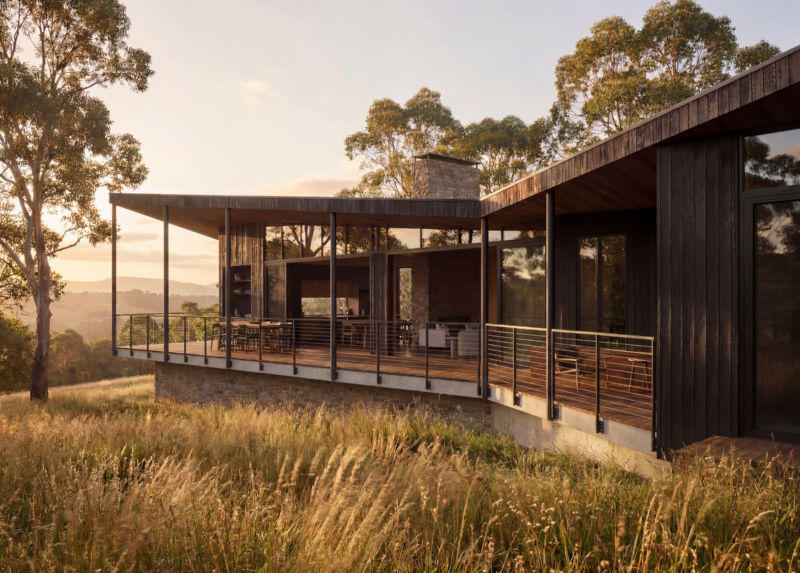
Deep roof overhangs and generous verandahs provide shelter from intense rainfall and solar exposure while reinforcing the transition between enclosed and open spaces. Rather than forming a clear boundary, these thresholds allow the architecture to dissolve into the garden, encouraging a way of living that embraces the tropical climate.
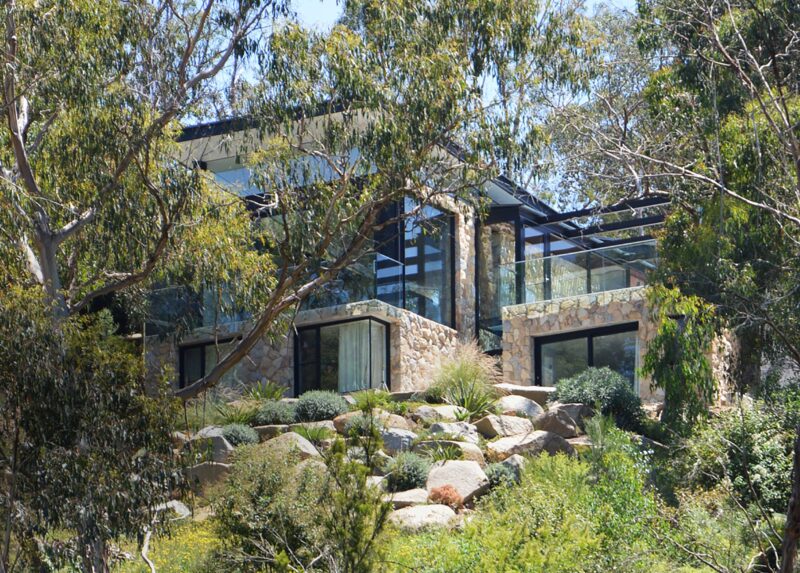
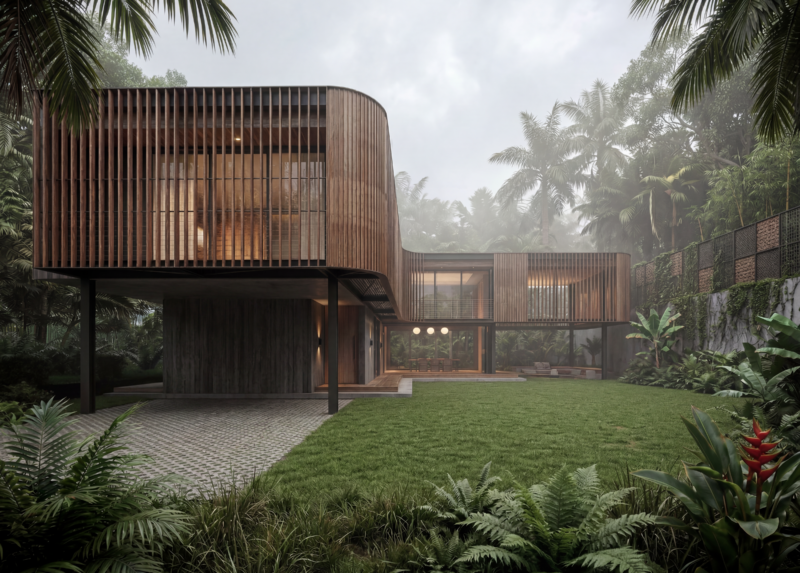
Materiality is deliberately restrained, relying on natural timber, limestone and textured masonry to complement the surrounding vegetation. These materials are selected not only for their durability within a humid coastal environment, but also for the way they weather over time, allowing the home to develop character while remaining robust and low maintenance.
Security is achieved through planning rather than fortification. The arrangement of pavilions and courtyards creates a protected internal landscape, where privacy is established through layered gardens, controlled sightlines and carefully positioned built form instead of perimeter walls alone. This inward-looking composition transforms the house into a secluded tropical sanctuary while maintaining openness and connection to nature.
Natural light is filtered through vegetation, verandahs and deep eaves, producing soft, diffuse interiors that remain comfortable throughout the day. The changing quality of light becomes an integral part of the architectural experience, reinforcing the seasonal rhythms of the tropical environment.
The Courtyard Pavilion demonstrates an alternative model for tropical living—one where architecture is experienced as a sequence of gardens, rooms and sheltered outdoor spaces rather than a singular building. By allowing landscape, climate and movement to shape the home, the design creates a calm, resilient and deeply connected place to live, where architecture and nature become inseparable.
Lae House – Pavilion Concept Project Details
Status
Project Type
Location
Floor area
Photography
Architectural Team
Engineering Team
Materials
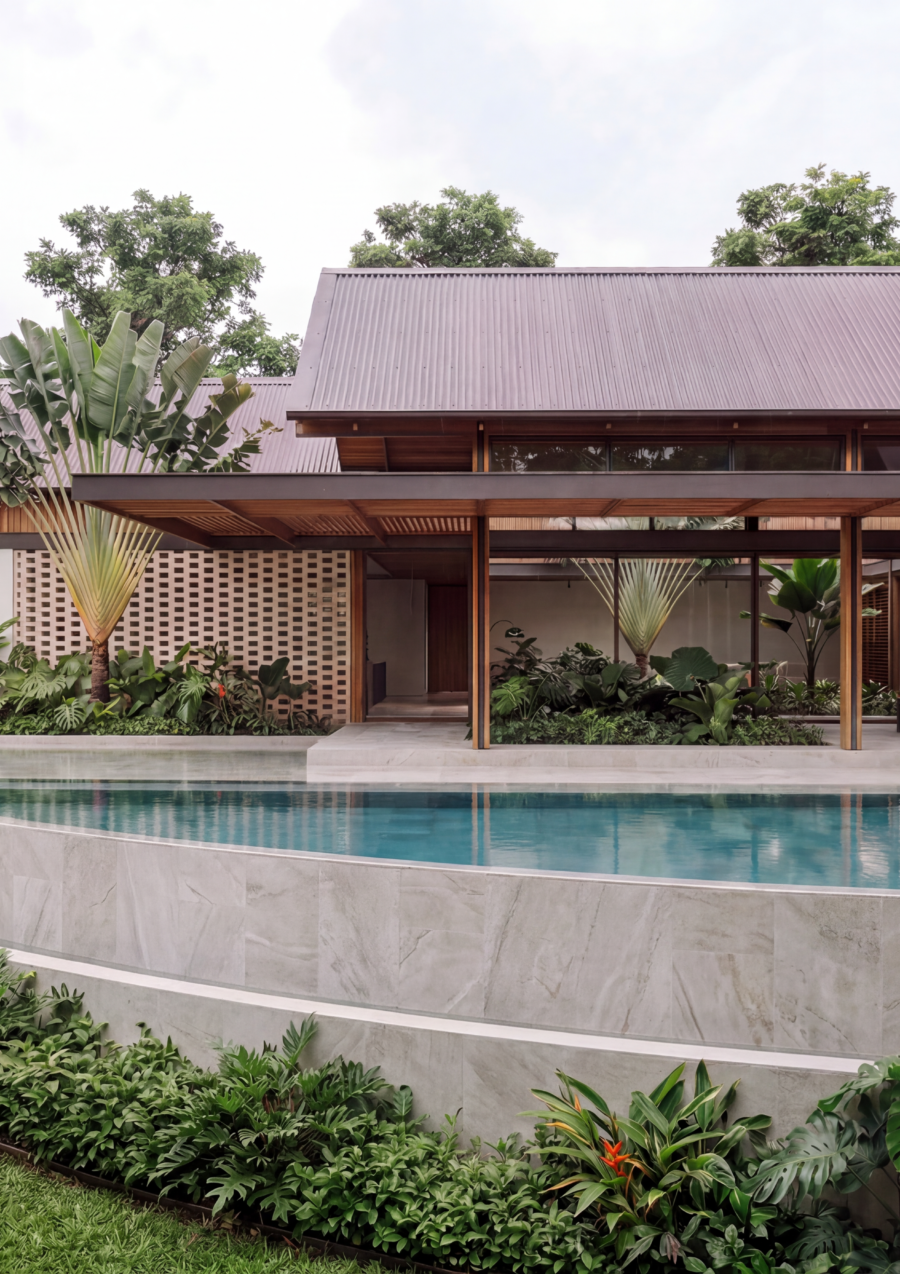
Exploring Site and Concept Option 1#
Concept 1 proposes a two-storey configuration that establishes a clear vertical gradient of privacy and security across the dwelling. The building is positioned high on the site and articulated as an L-shaped form, defining its relationship to the driveway and establishing a strong geometric response to the topography. This arrangement separates public and private functions across levels while reinforcing the building’s presence within the landscape through a controlled and elevated siting strategy.
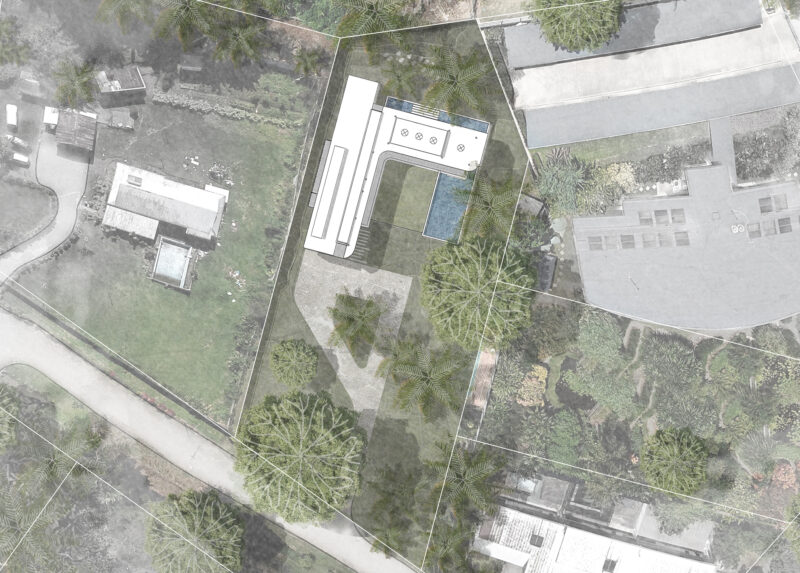
Exploring the Site; Concept Option 2#
Concept 2 proposes a single-storey arrangement that explores how privacy and security can be achieved within a horizontal spatial configuration. The architecture is organised as a series of pavilions distributed within the landscape, drawing on local vernacular references and reinterpreting them through a contemporary architectural language. A clear spatial hierarchy defines the plan, with functions arranged to transition progressively from public to more private conditions as one moves through the sequence of spaces.